The Meaning Behind
Every Ring
Discover what your ring material says about you, the hidden symbolism of each finger, and the cultural traditions behind ring-wearing practices across the world.
Choose Your Metal
Each ring material carries its own physical properties, cultural heritage, and symbolic meaning. From precious metals to natural stones and modern alloys — discover the material that resonates with your story.
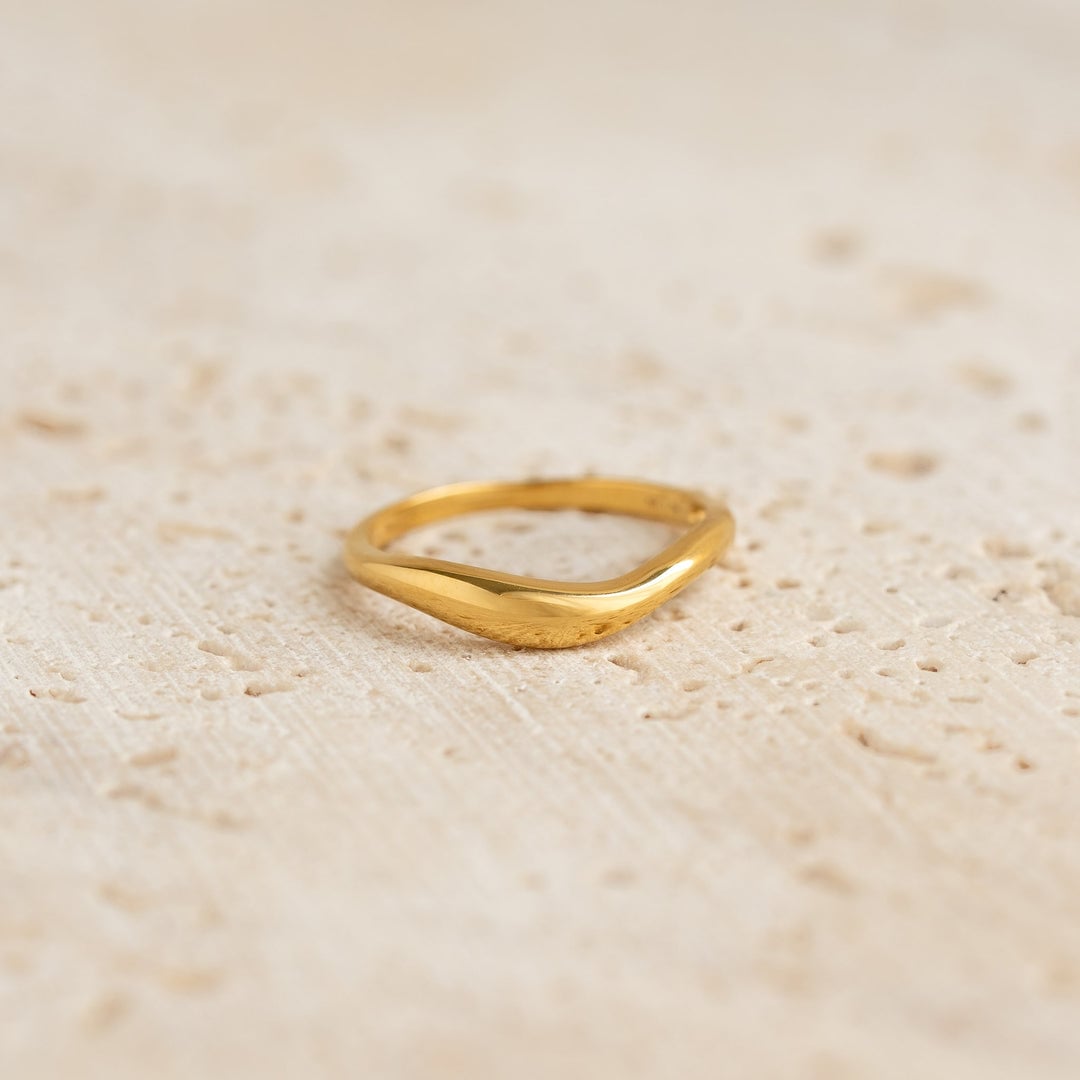
Gold
Symbolic Meaning
Wealth, prosperity, wisdom, and divine connection. Gold has been revered across civilizations as the metal of the sun, representing eternal light and spiritual illumination.
Gold is the classic choice for rings, available in yellow, white, and rose variations. Its warmth and prestige have made it the most popular precious metal for jewelry for over 5,000 years. Ancient Egyptians believed gold was the flesh of the gods, while in Hinduism it symbolizes knowledge and learning. In modern times, gold remains the universal symbol of achievement, commitment, and lasting value. Its malleability allows for intricate designs, from simple bands to elaborate settings.
Specifications
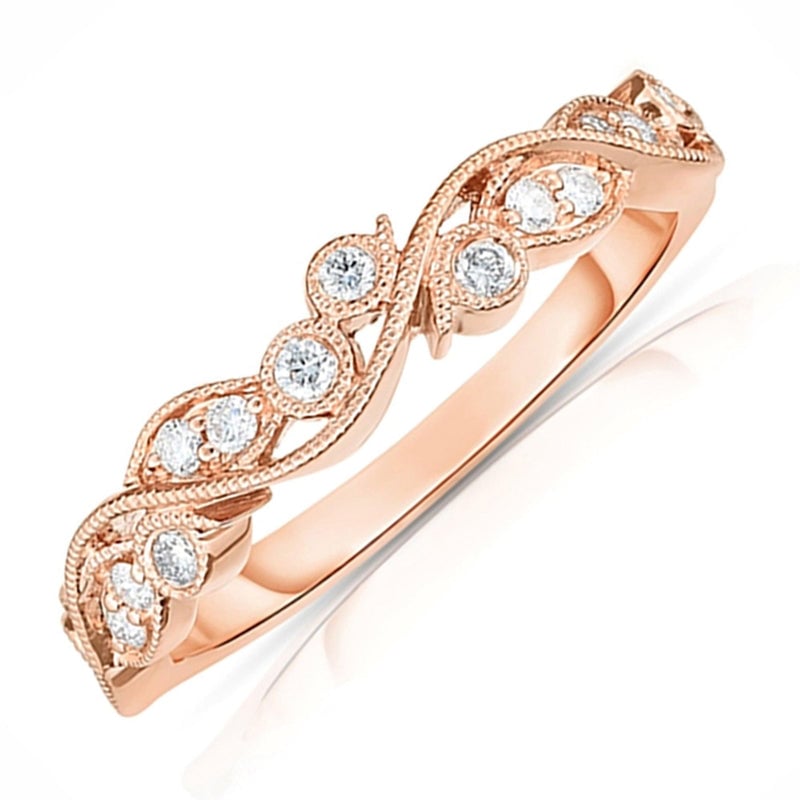
Rose Gold
Symbolic Meaning
Love, compassion, elegance, and emotional healing. The warm pink hue of rose gold is associated with tenderness, romance, and the gentle strength of the heart.
Rose gold is a stunning alloy of pure gold and copper, creating a distinctive warm pink hue that has surged in popularity in recent decades. First popularized in 19th-century Russia by the famous jeweler Carl Fabergé, it was originally known as "Russian Gold." The copper content not only gives it the signature blush color but also makes it more durable than yellow gold. Rose gold complements all skin tones and has become a modern symbol of refined romance and individuality.
Specifications
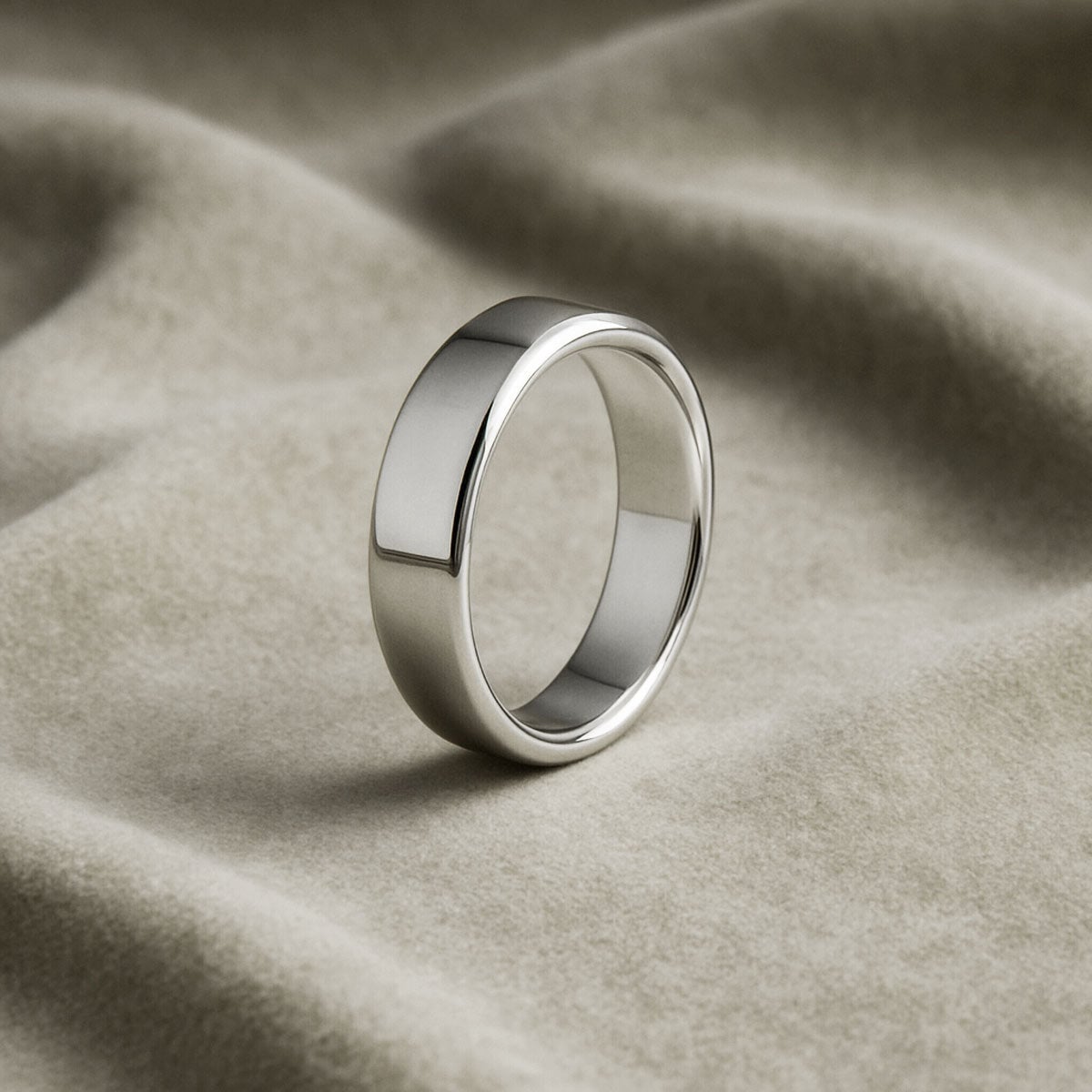
Silver
Symbolic Meaning
Purity, clarity, intuition, and lunar energy. Silver is the metal of the moon, associated with feminine energy, emotional balance, and the subconscious mind.
Sterling silver (925) offers a bright, polished look at a fraction of the cost of gold or platinum. Valued for millennia, silver has been used in jewelry, currency, and sacred objects across nearly every culture. The ancient Greeks associated it with the goddess Artemis, while Celtic traditions viewed silver as a protective metal. Its versatility allows for both simple, understated designs and elaborate, ornate creations. Silver develops a natural patina over time that many collectors prize.
Specifications
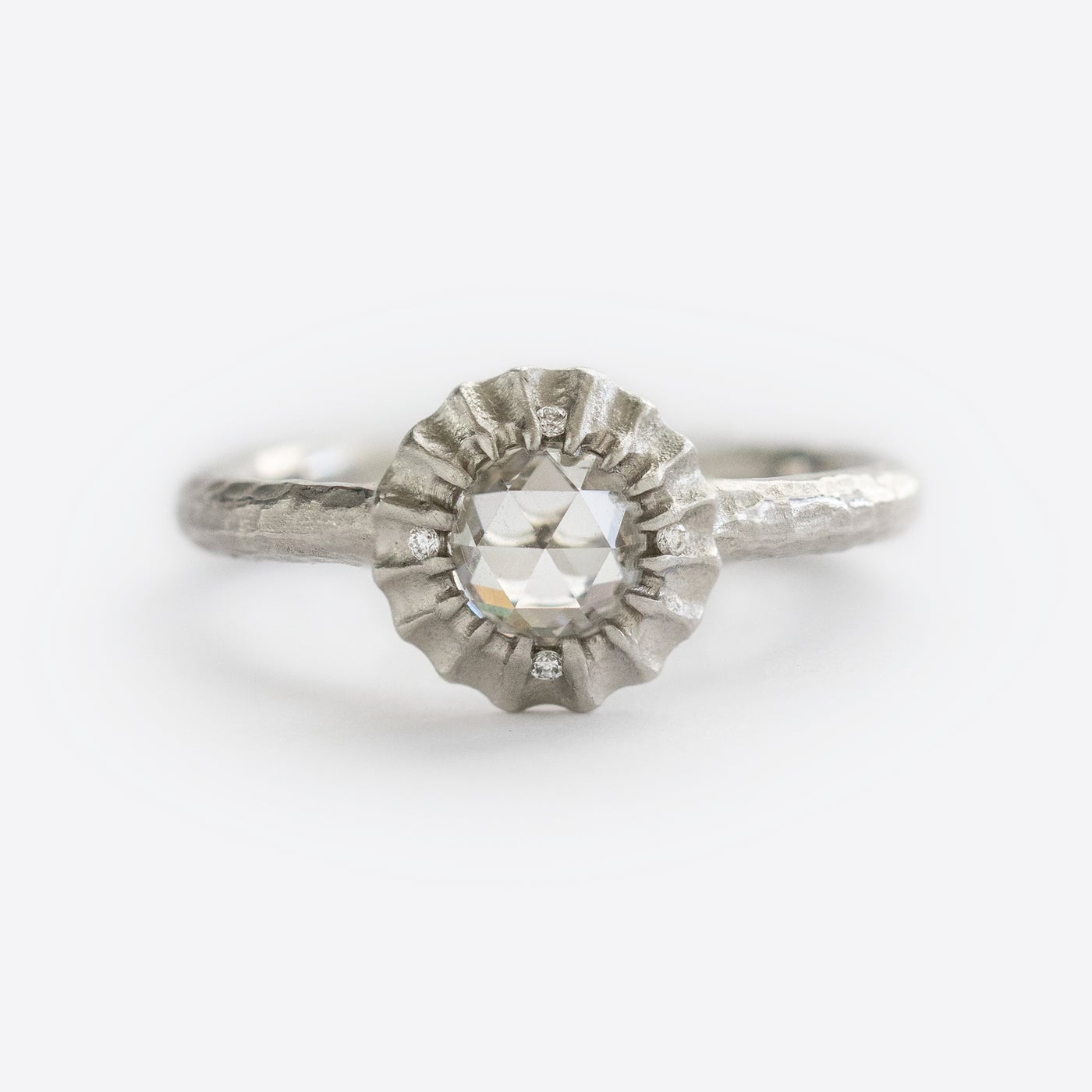
Platinum
Symbolic Meaning
Endurance, rarity, integrity, and unwavering commitment. Platinum's resistance to wear and tarnish makes it the ultimate symbol of a bond that stands the test of time.
Platinum is the premier white metal — dense, durable, and naturally white. With 95% purity in jewelry, it needs no rhodium plating and is the top choice for heirloom-quality pieces. Discovered by South American indigenous peoples and later brought to Europe in the 18th century, platinum is 30 times rarer than gold. It does not fade, tarnish, or wear away significantly over decades of daily wear. Instead, it develops a distinguished patina that can be polished to restore its original mirror finish.
Specifications
Titanium
Symbolic Meaning
Resilience, innovation, courage, and inner strength. Named after the Titans of Greek mythology, titanium represents the power to overcome any challenge.
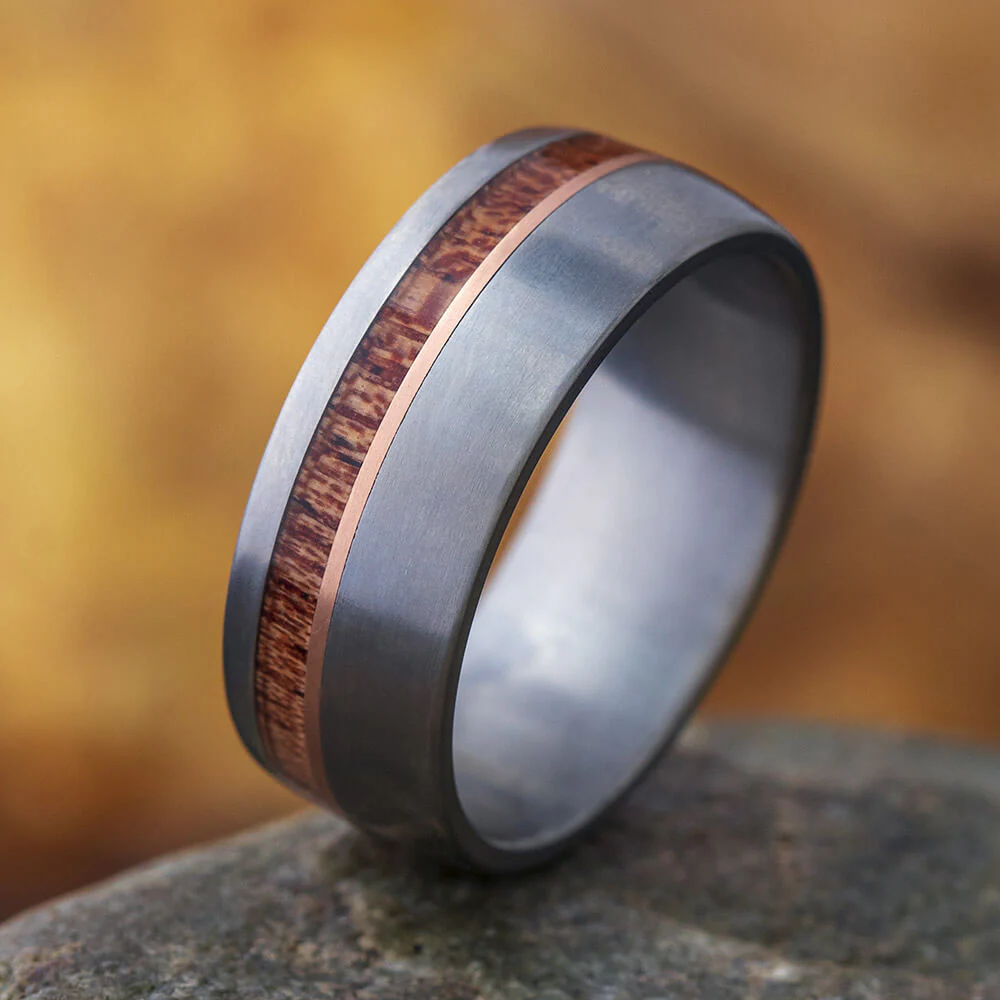
Titanium combines remarkable strength with featherlight weight, making it the metal of choice for aerospace, medicine, and modern jewelry. Its contemporary appeal and excellent biocompatibility make it a favorite for people with active lifestyles. Titanium is completely resistant to corrosion from seawater, chlorine, and body chemistry. It can be anodized to produce a spectrum of vivid colors — from deep purple to electric blue — without dyes or coatings. Important note: titanium rings cannot be resized, so accurate sizing before purchase is essential.
Specifications

Tungsten Carbide
Symbolic Meaning
Permanence, unyielding strength, and unbreakable resolve. Tungsten represents the durability of commitments made with absolute certainty.
One of the hardest materials used in jewelry, tungsten carbide is virtually scratch-proof and maintains a mirror polish indefinitely. Its extraordinary hardness (rivaling diamond) means it will look as pristine in 50 years as the day it was bought. Tungsten has the highest melting point of any metal (3,422°C / 6,192°F), symbolizing strength that cannot be diminished. It is about twice the density of steel, giving rings a substantial, luxurious weight on the finger. Note that tungsten is brittle under extreme impact and can shatter rather than bend.
Specifications
Palladium
Symbolic Meaning
Grace, discovery, and understated elegance. Named after the asteroid Pallas (itself named after the Greek goddess Athena), palladium embodies wisdom and refined beauty.
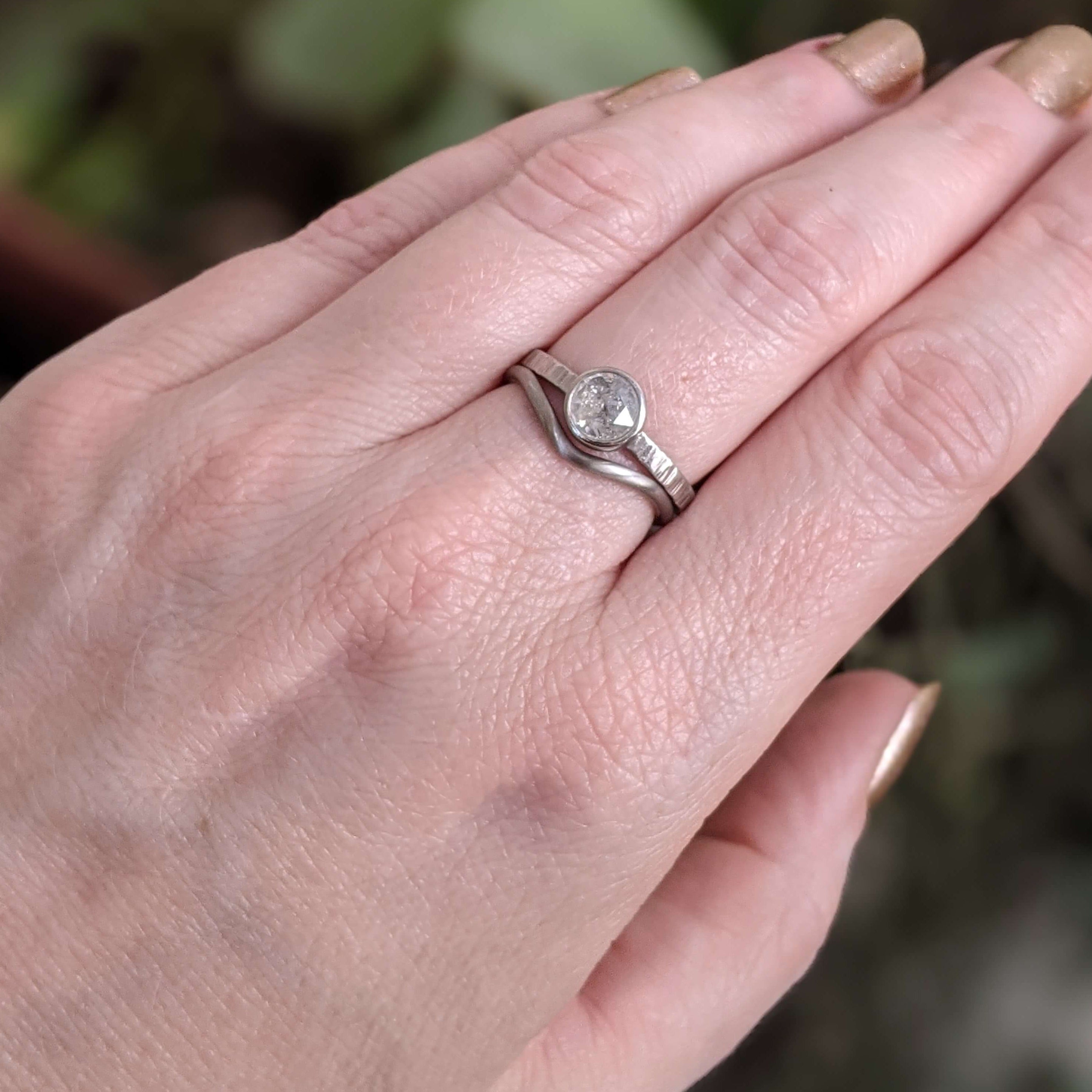
A platinum-group metal with a naturally white color, palladium offers similar elegance and durability at a lighter weight and often a more accessible price point. It was first used in jewelry in 1939 as a platinum substitute during World War II. Palladium is approximately 40% lighter than platinum while maintaining excellent durability, making it one of the most comfortable precious metals to wear. It does not require rhodium plating and maintains its bright white appearance naturally over time.
Specifications
Stainless Steel
Symbolic Meaning
Dependability, resilience, and everyday strength. Stainless steel represents the practical, grounded values of reliability and hard work.
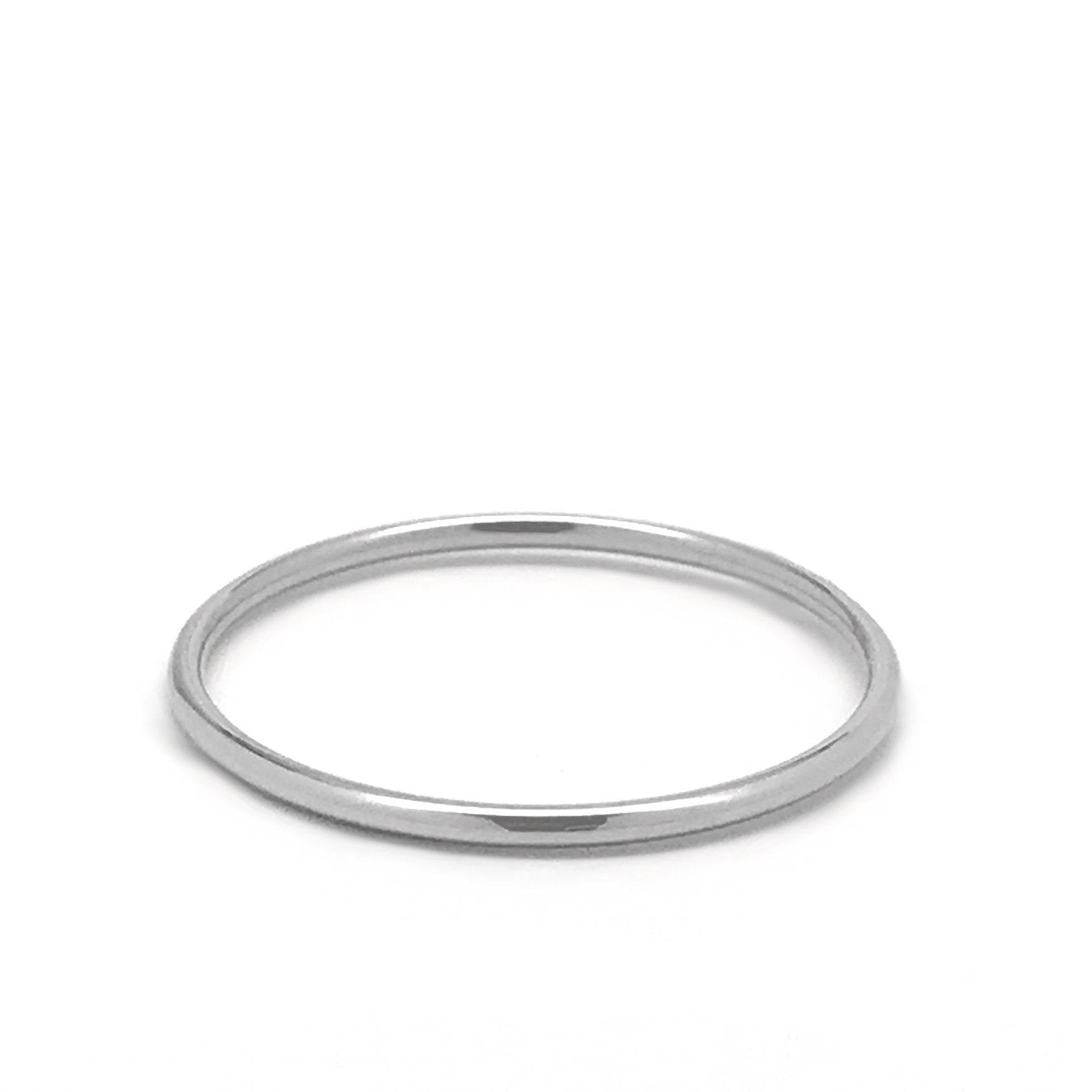
An affordable and hardwearing option, stainless steel resists rust, tarnish, and daily wear with impressive reliability. Grade 316L (surgical steel) is the jewelry standard, offering excellent corrosion resistance even in constant contact with skin and moisture. Stainless steel rings can be crafted with inlays of carbon fiber, wood, or gemstones, offering a modern industrial aesthetic. They hold up exceptionally well to active lifestyles, making them popular among athletes, tradespeople, and anyone who wants a worry-free ring.
Specifications
Copper
Symbolic Meaning
Conductivity, healing, professional achievement, and community. In engineering traditions, the copper or iron ring is a powerful symbol of ethical responsibility and humility.
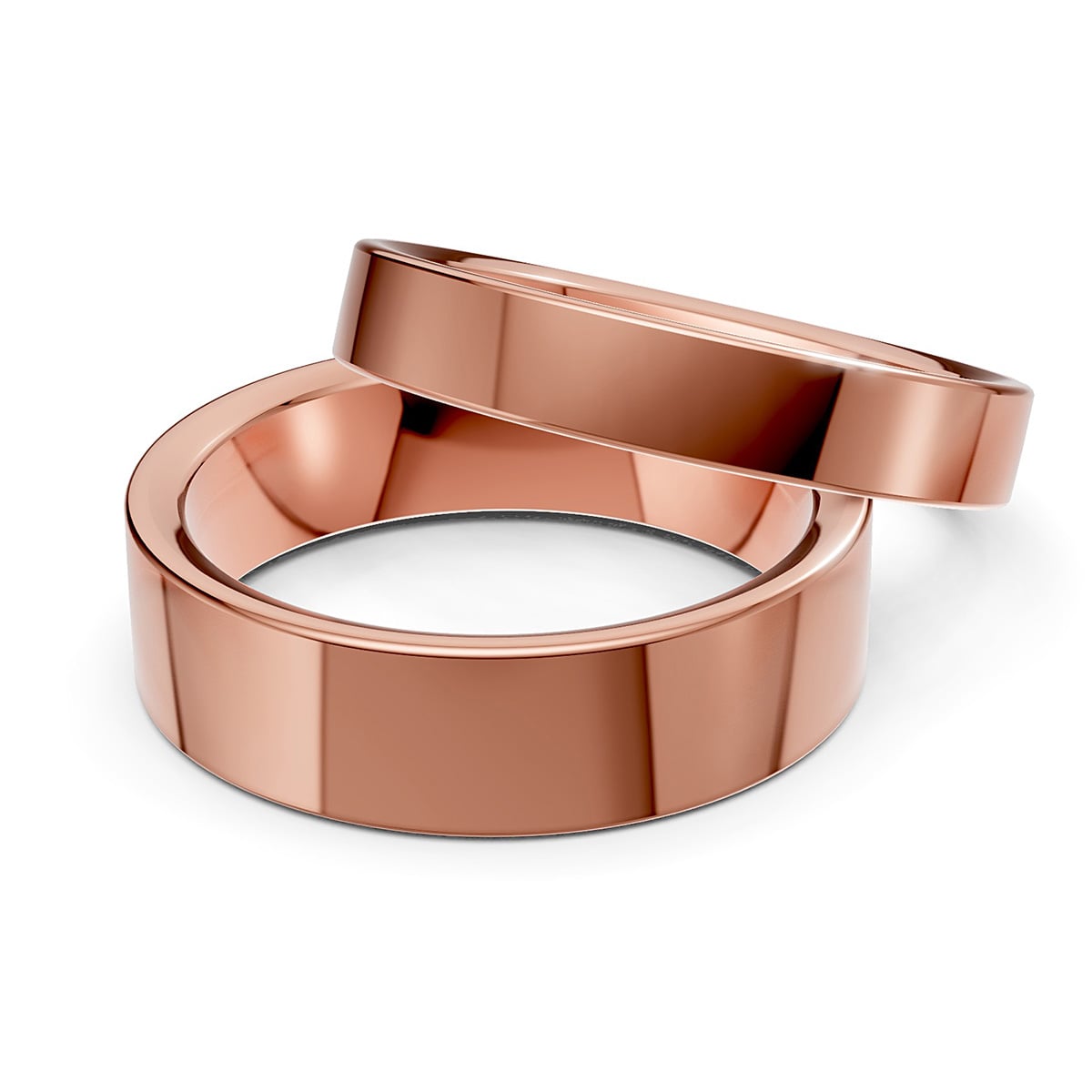
Copper holds a unique place in ring symbolism, particularly in engineering. The Iron Ring (or copper ring in some traditions) is presented to graduating engineers in Canada during the Ritual of the Calling of an Engineer, a ceremony initiated in 1922 and inspired by Rudyard Kipling. Worn on the working hand's pinky finger, it serves as a constant reminder of the engineer's obligations to society and ethical practice. Beyond engineering, copper has been valued for thousands of years for its warm reddish-orange hue and believed healing properties. Some cultures attribute anti-inflammatory and energy-balancing qualities to copper.
Specifications
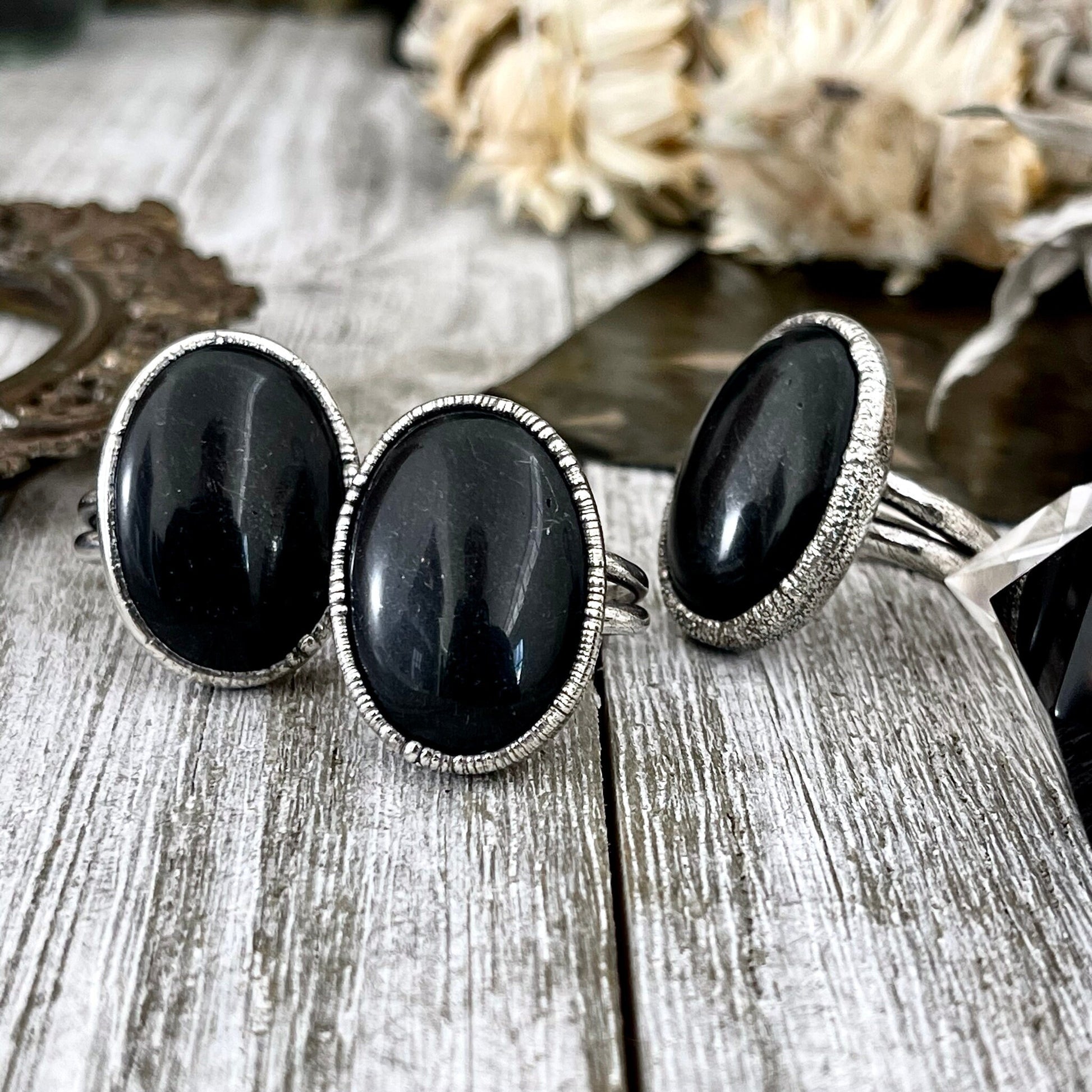
Onyx
Symbolic Meaning
Protection, inner strength, grounding, and self-mastery. Onyx has been used as a protective talisman since antiquity, believed to absorb negative energy and fortify the spirit.
Onyx is a banded variety of chalcedony (a type of quartz) prized for its deep, lustrous black color — though it also occurs in brown, red, and white varieties. Ancient Romans wore onyx into battle for courage and protection, while in Indian tradition it is considered one of the most powerful stones for warding off negativity. As a ring material, onyx is typically set as a cabochon or flat stone in a metal band (often silver or gold). It creates a striking, bold appearance that commands attention. Black onyx rings are particularly popular in men's jewelry and signet ring designs.
Specifications
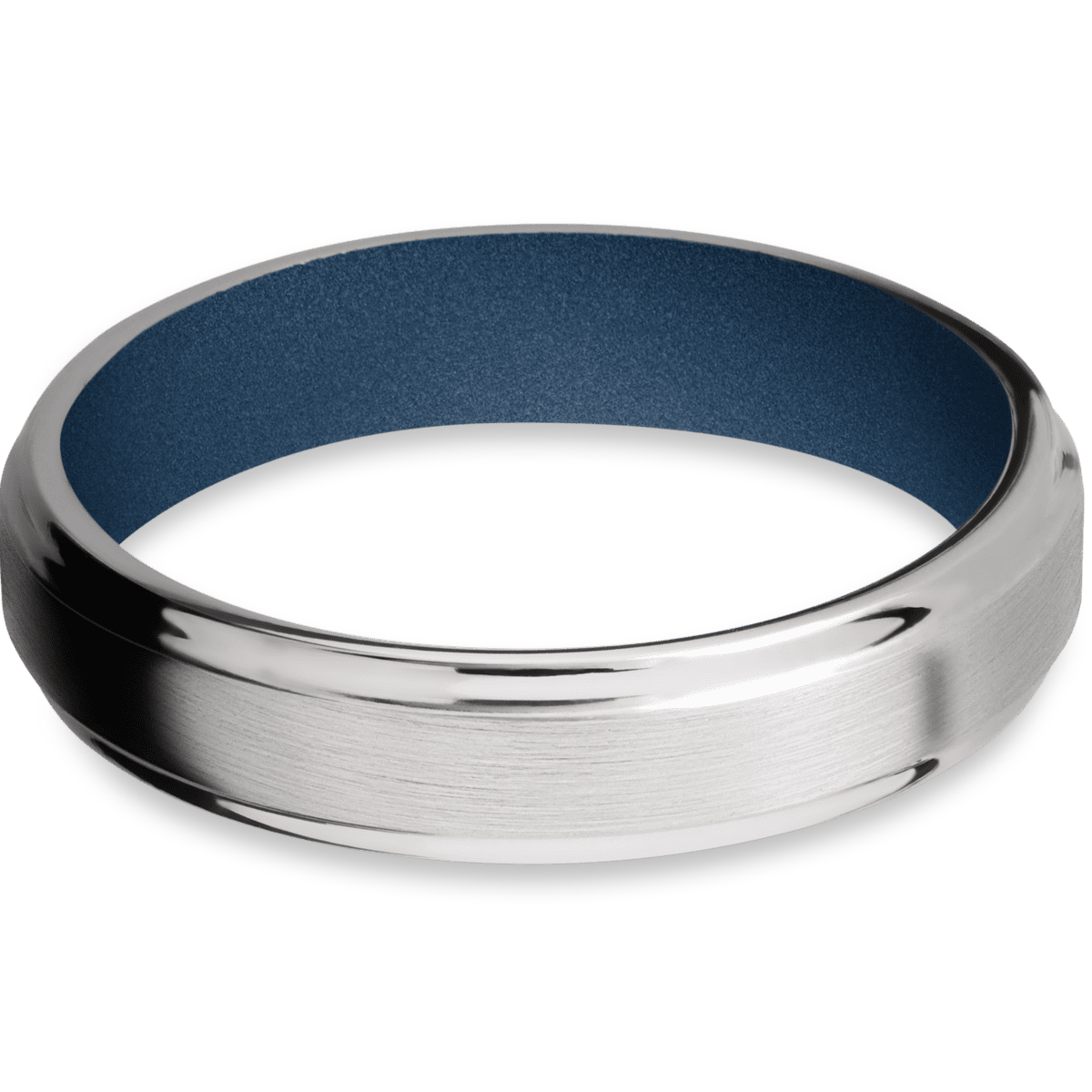
Cobalt Chrome
Symbolic Meaning
Vitality, steadfastness, and modern confidence. Cobalt's naturally bright white color and extreme durability symbolize clarity of purpose and unwavering commitment.
Cobalt chrome is a contemporary metal alloy that produces an intensely white, bright luster that rivals white gold and platinum — but at a fraction of the cost and with far greater scratch resistance. Originally developed for aerospace and medical applications (including dental and orthopedic implants), cobalt chrome has become increasingly popular in wedding jewelry. It is four times harder than platinum and will not tarnish, fade, or need replating. The alloy is completely hypoallergenic and can be polished to a mirror finish or given a brushed, matte, or hammered texture.
Specifications
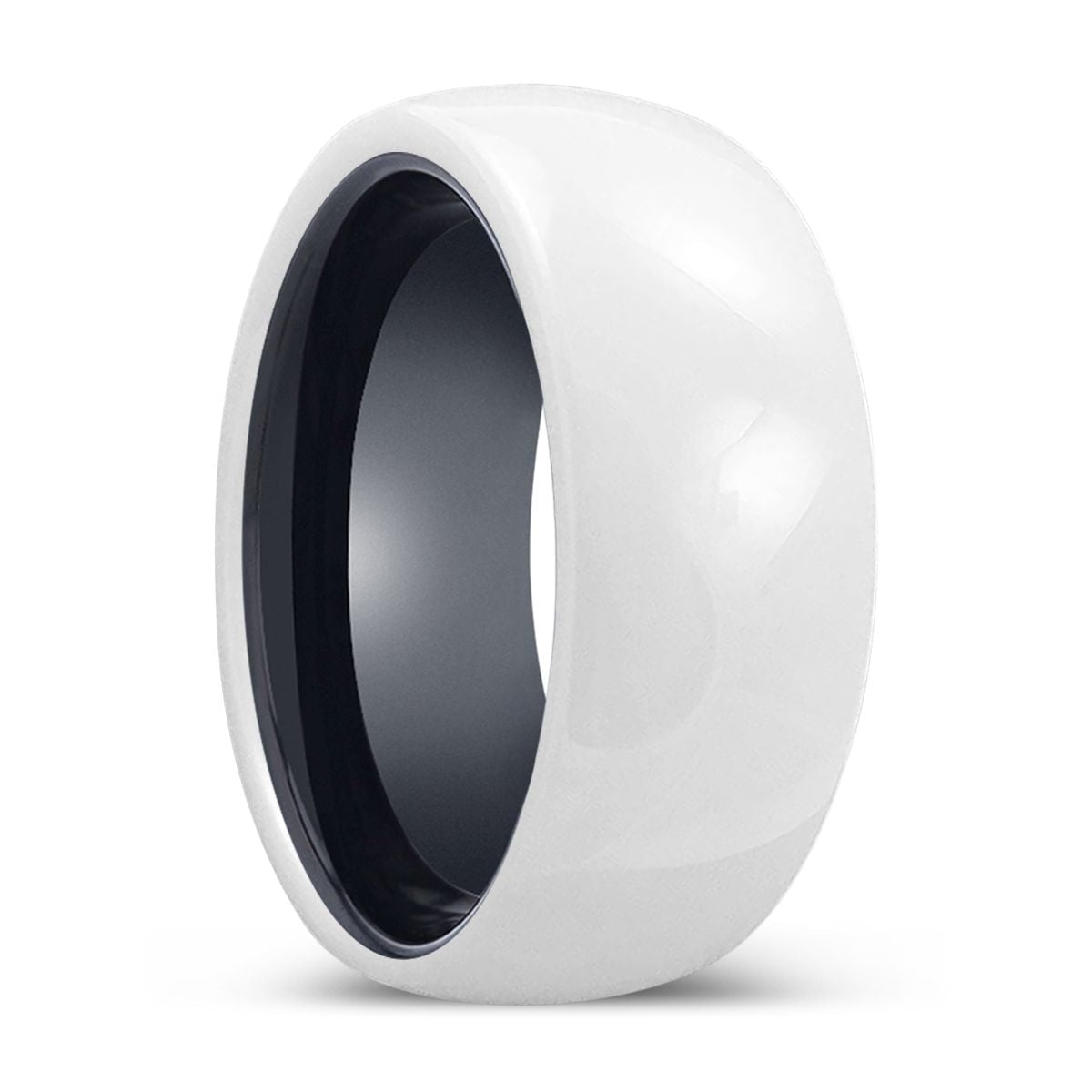
Ceramic
Symbolic Meaning
Purity, transformation, and modern elegance. Ceramic undergoes extreme heat to achieve its final form, symbolizing personal transformation and refinement through life's challenges.
High-tech ceramic rings are made from titanium carbide or zirconium oxide, fired at temperatures exceeding 1,400°C (2,552°F) to create an incredibly hard, lightweight, and scratch-resistant material. Available in deep black, pristine white, and various colors, ceramic rings offer a sleek, contemporary aesthetic that feels virtually weightless on the finger. They are completely hypoallergenic and chemically inert, making them safe for people with even the most sensitive skin. Ceramic will never fade, discolor, or react with skin chemistry.
Specifications
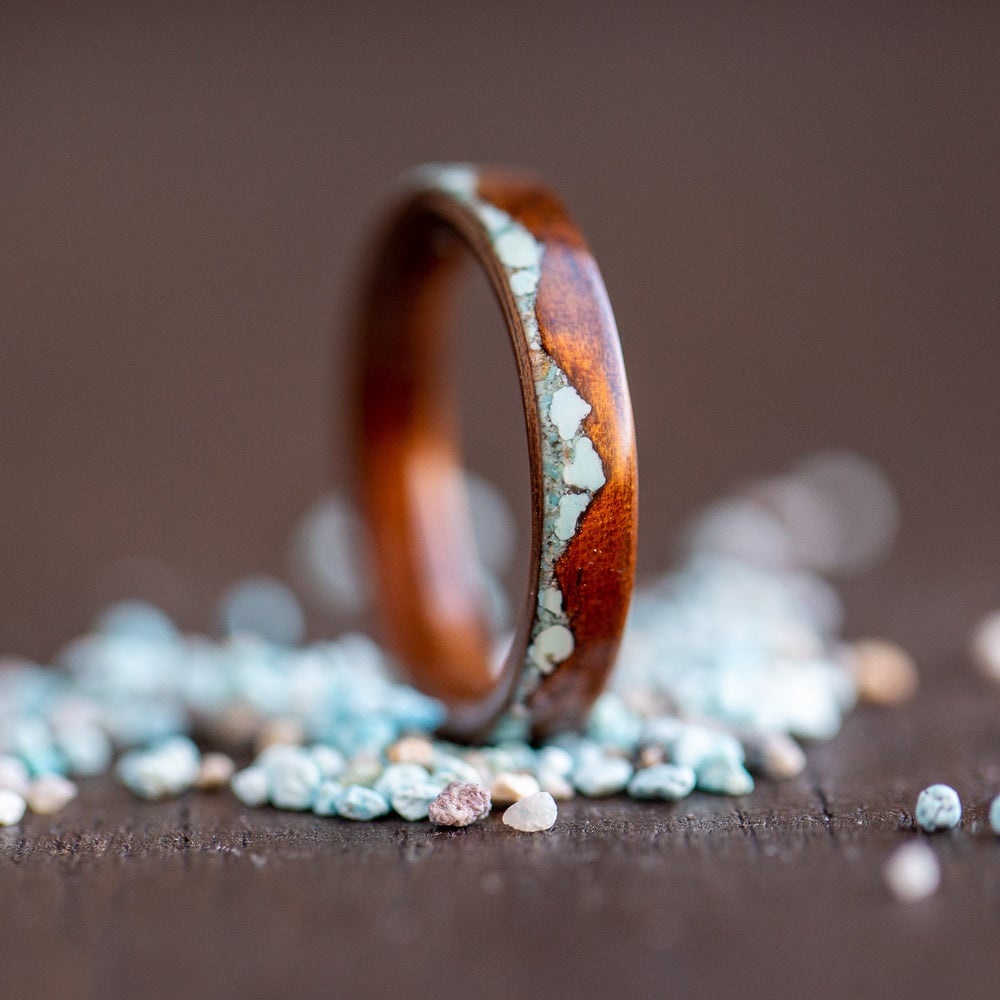
Wood
Symbolic Meaning
Growth, connection to nature, grounding, and organic beauty. Wood rings represent a deep bond with the natural world and the continuous cycle of life, growth, and renewal.
Wooden rings offer an entirely unique aesthetic — every ring is one-of-a-kind due to natural grain patterns, color variations, and the specific species of wood used. Popular woods include koa (Hawaiian heritage), walnut (wisdom), oak (strength), olive (peace), and ebony (protection). Many modern wooden rings feature durable inner bands of titanium, tungsten, or stainless steel for structural integrity, with the wood as an outer sleeve or inlay. Some incorporate stone, turquoise, or resin inlays for added visual interest. Wooden rings are popular for eco-conscious couples and those seeking a non-traditional symbol of commitment.
Specifications
The Power of Gemstones
Gemstones have carried spiritual, healing, and symbolic significance for millennia. From the invincible diamond to the transformative alexandrite — each stone tells a story of the earth, human culture, and personal meaning.
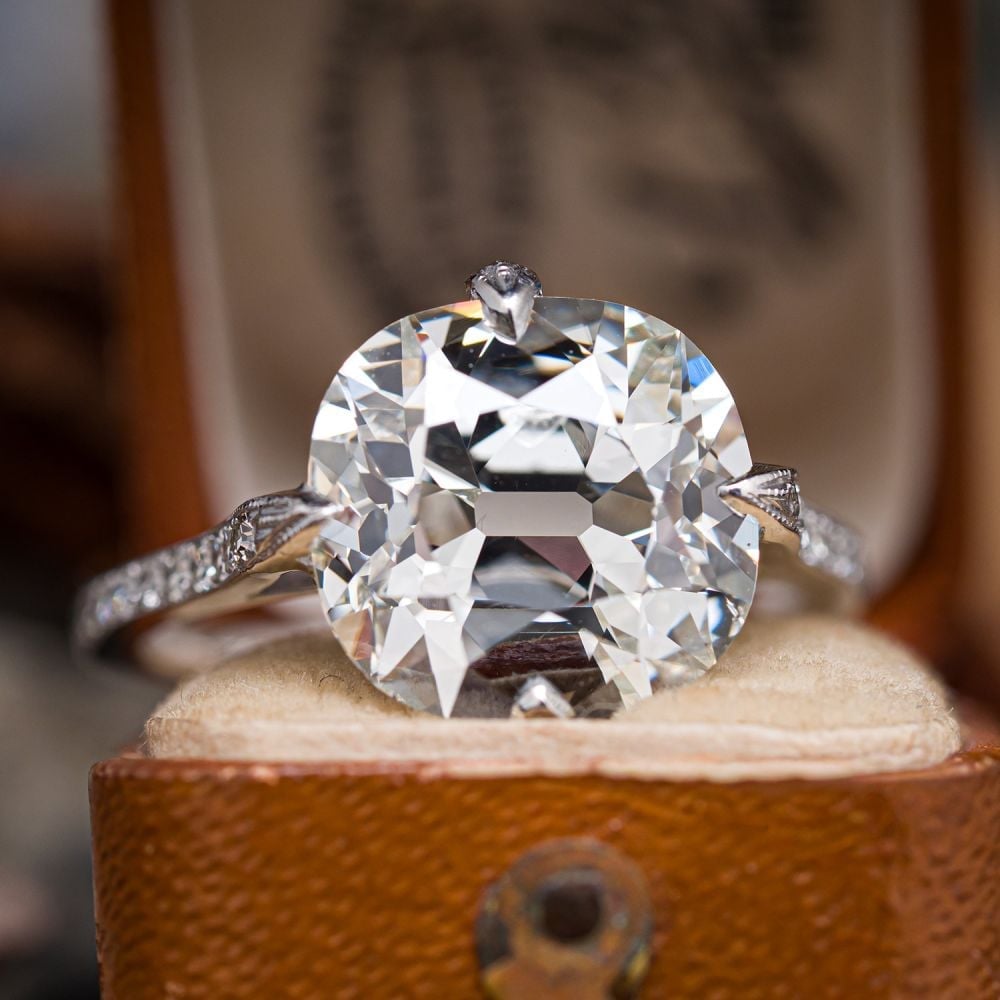
Diamond
Symbolic Meaning
Invincibility, eternal love, purity, and clarity of mind. The word "diamond" comes from the Greek "adamas" meaning unconquerable — symbolizing a love and spirit that nothing can break.
The diamond is the most iconic gemstone in the world, formed deep within the Earth under extreme pressure and heat over billions of years. Its unmatched hardness (10 on the Mohs scale) makes it the hardest natural substance known. Diamonds have been treasured since antiquity — ancient Hindus believed they were created by lightning bolts, while the Greeks thought they were tears of the gods. The modern tradition of diamond engagement rings was popularized by De Beers in 1947 with their legendary "A Diamond is Forever" campaign. Diamonds are evaluated by the 4 Cs: Cut, Clarity, Color, and Carat weight.
Properties & Details
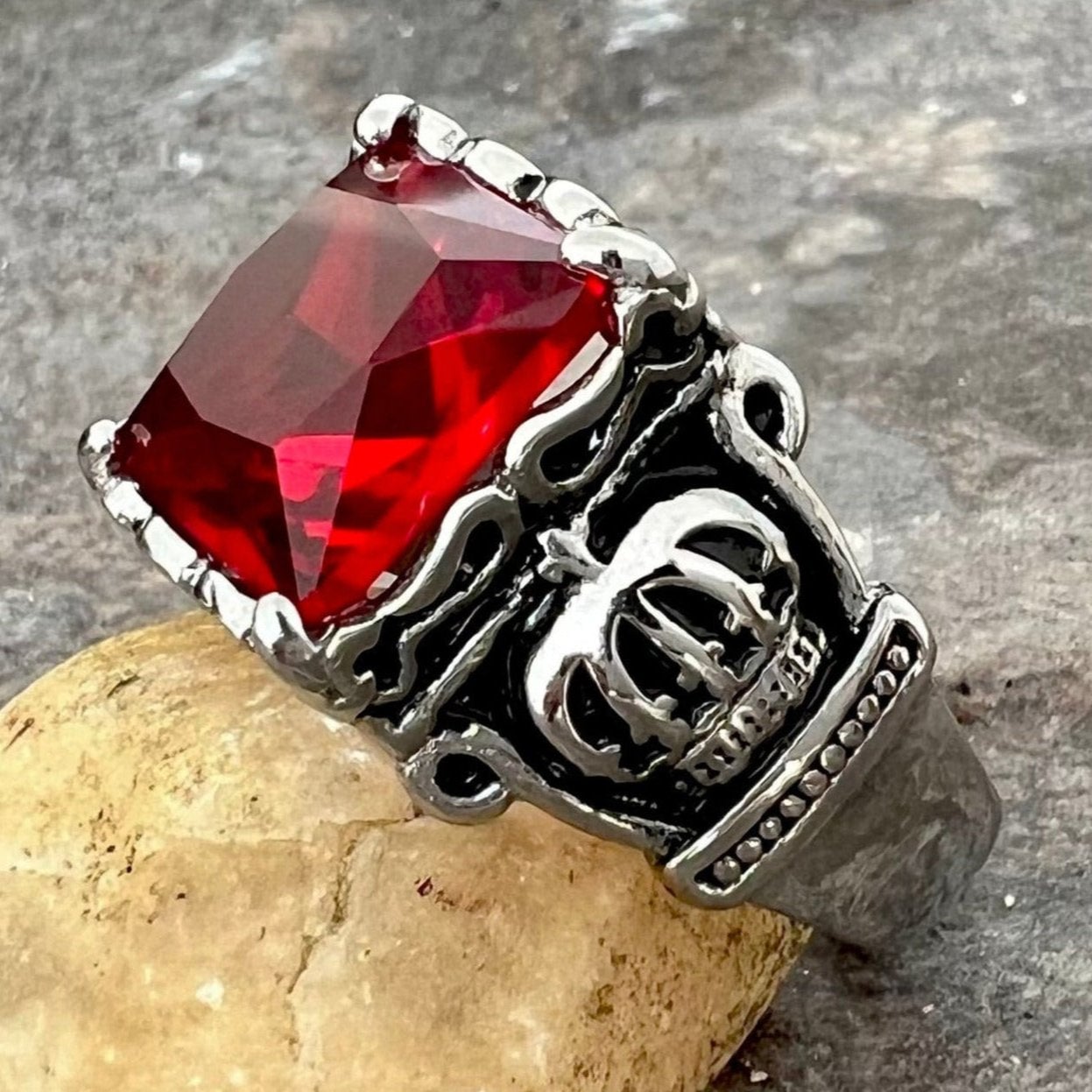
Ruby
Symbolic Meaning
Passion, courage, vitality, and protection. Rubies were called "ratnaraj" in Sanskrit — the King of Precious Stones — and were believed to contain an inextinguishable inner fire.
Ruby is one of the four precious gemstones (alongside diamond, sapphire, and emerald) and has been coveted by royalty for millennia. Its intense red color comes from chromium within the mineral corundum. The finest rubies — known as "pigeon blood" rubies — command prices exceeding those of diamonds. In ancient Burma (Myanmar), warriors implanted rubies into their skin believing it made them invincible in battle. In Hindu tradition, rubies are associated with the sun and are believed to bestow good health, wealth, and wisdom. Medieval Europeans wore rubies to guarantee health, success in love, and protection from evil.
Properties & Details
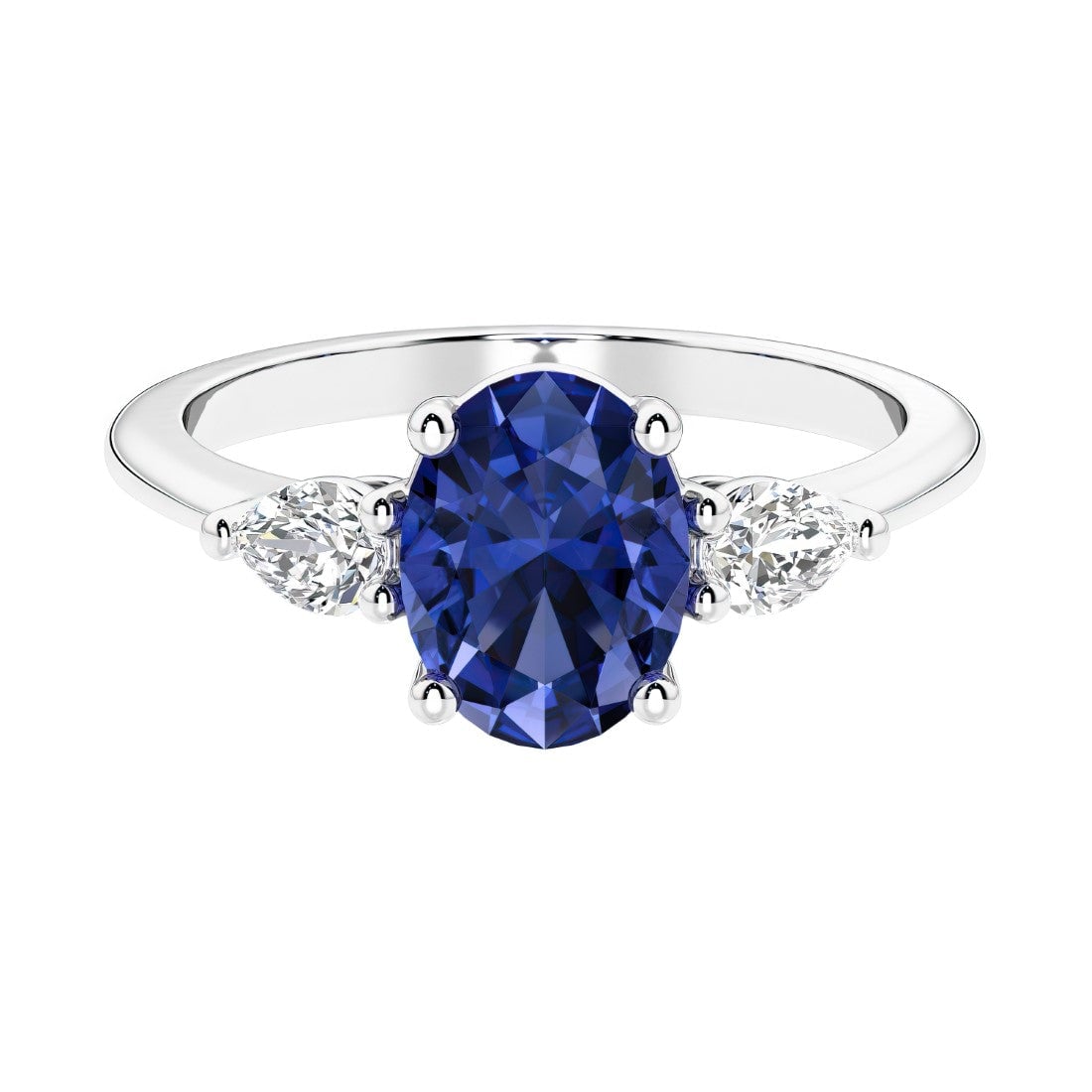
Sapphire
Symbolic Meaning
Wisdom, nobility, truth, and divine favor. Sapphires have been the stone of kings, clergy, and scholars for centuries, representing sincerity and faithfulness in relationships.
Sapphire, like ruby, belongs to the corundum mineral family but is best known for its velvety blue color — though sapphires actually come in every color except red (which is classified as ruby). The most prized variety is the Kashmir sapphire, with its cornflower blue hue. Princess Diana's (now Kate Middleton's) sapphire engagement ring made it one of the most famous gemstones in the world. Ancient Persians believed the sky was painted blue by the reflection of sapphires. In medieval times, clergy wore sapphires to symbolize heaven, and the stone was believed to attract divine blessings.
Properties & Details
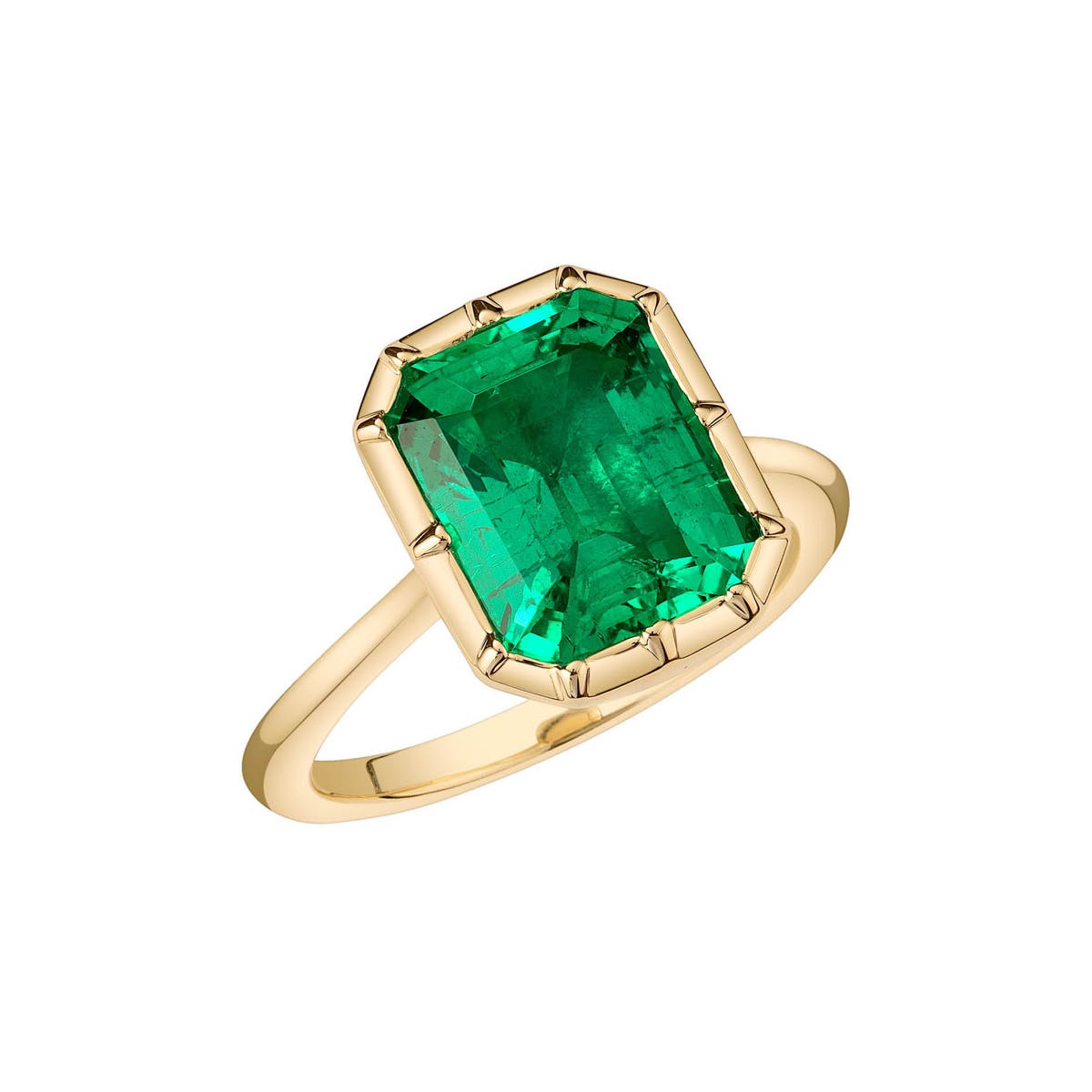
Emerald
Symbolic Meaning
Rebirth, fertility, love, and wisdom. Cleopatra was famously devoted to emeralds, and the stone has been associated with spring, renewal, and the regenerative power of nature.
Emerald is the green variety of the mineral beryl, colored by trace amounts of chromium and sometimes vanadium. Its rich green hue has captivated civilizations for over 4,000 years — from ancient Egyptian mines to the legendary Muzo mines of Colombia. Emeralds often contain natural inclusions called "jardin" (French for garden), which are considered part of the stone's character rather than flaws. The Incas and Aztecs regarded emeralds as holy stones, while in ancient Rome, Nero reportedly watched gladiator fights through a large emerald to soothe his eyes.
Properties & Details
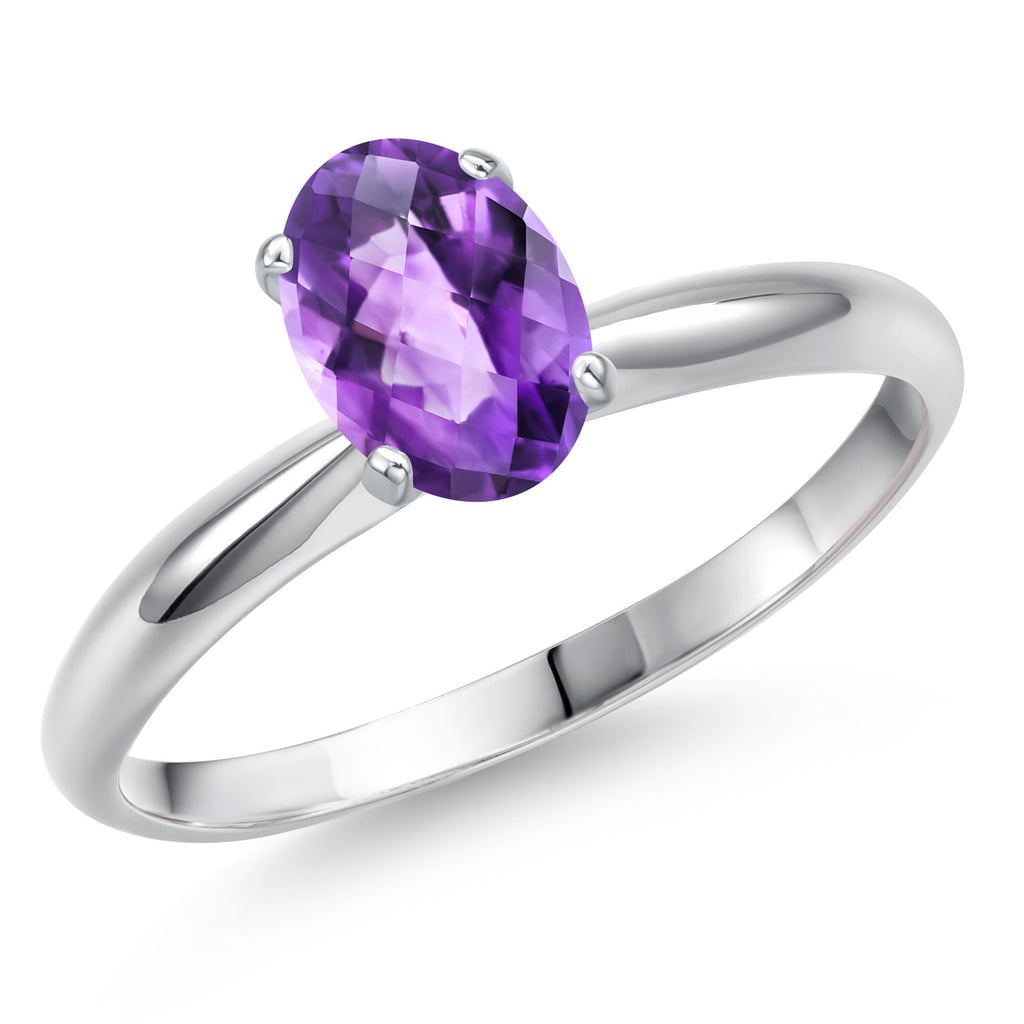
Amethyst
Symbolic Meaning
Peace, sobriety, clarity, and spiritual protection. The name comes from the Greek "amethystos" meaning "not intoxicated" — ancient Greeks believed wearing amethyst prevented drunkenness.
Amethyst is a violet variety of quartz that has been highly valued throughout history. Once considered as precious as diamonds, large deposits discovered in Brazil in the 19th century made it more accessible. In ancient Egypt, it was carved into heart-shaped amulets for burial. The Catholic Church adopted amethyst as a symbol of piety — bishops traditionally wear amethyst rings. Leonardo da Vinci wrote that amethyst had the power to dissipate evil thoughts and quicken intelligence. Today, amethyst is treasured both for its stunning purple color and its calming metaphysical properties.
Properties & Details
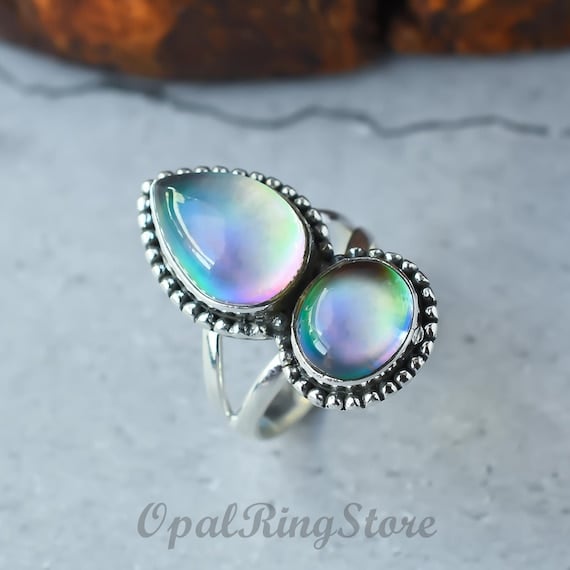
Opal
Symbolic Meaning
Creativity, inspiration, imagination, and emotional expression. Opals display a unique "play of color" — shifting spectral hues that symbolize the kaleidoscope of human emotion and imagination.
Opal is unlike any other gemstone — its internal structure diffracts light to produce a mesmerizing play of spectral colors called "opalescence." The Romans considered opal the most precious of all gems, calling it "opalus" — meaning precious stone. Queen Victoria was a passionate collector and gifted opals to her daughters, helping to revive their popularity after a period of superstitious disfavor. Australia produces over 90% of the world's precious opals, with the famous Lightning Ridge black opal being the rarest and most valuable variety. Each opal is entirely unique — no two opals display the same pattern of color.
Properties & Details
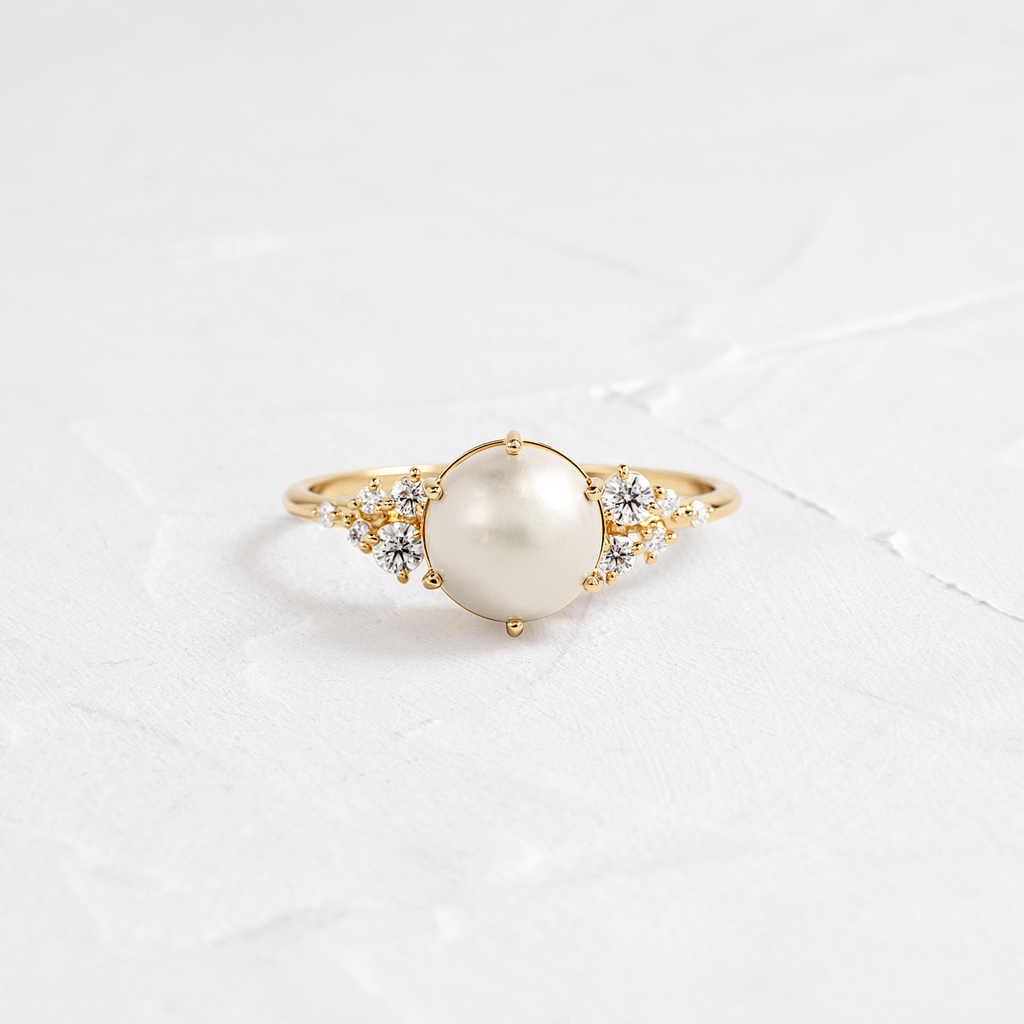
Pearl
Symbolic Meaning
Purity, innocence, wisdom gained through experience, and feminine grace. Pearls are the only gemstone created by a living organism, symbolizing transformation of adversity into beauty.
Pearls are organic gems formed inside mollusks when an irritant becomes coated in layers of nacre (mother of pearl). Unlike mined gemstones, pearls require no cutting or polishing — they emerge from the shell with their natural luster intact. For thousands of years, pearls were the most valuable gems in the world — Cleopatra famously dissolved a pearl in vinegar and drank it to win a bet with Mark Antony. In many Asian cultures, pearls symbolize wisdom and are associated with the moon and water. Today, cultured pearls (Akoya, South Sea, Tahitian, and freshwater) have made these treasures accessible to everyone.
Properties & Details
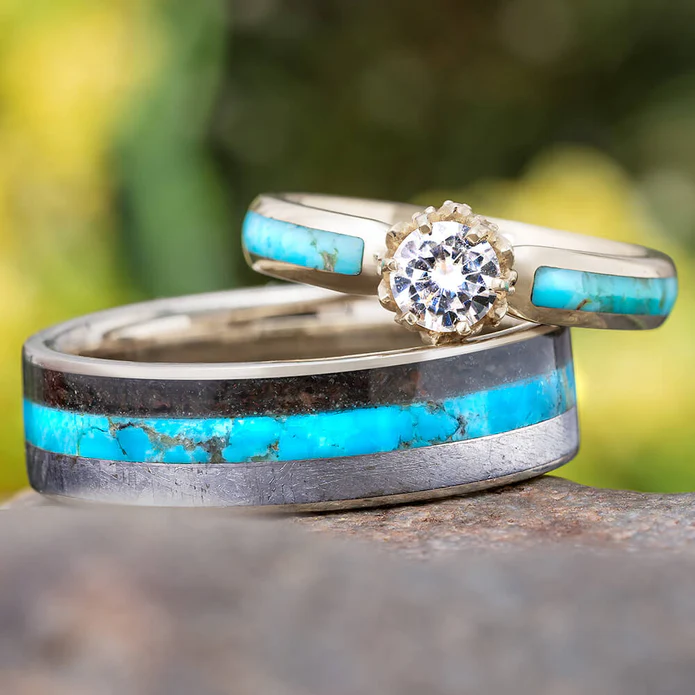
Turquoise
Symbolic Meaning
Protection, healing, friendship, and spiritual grounding. One of the oldest known gemstones, turquoise has been a sacred stone across Native American, Persian, Egyptian, and Tibetan cultures.
Turquoise is an opaque blue-to-green mineral that has been prized for over 7,000 years, making it one of humanity's oldest gemstones. The name comes from the French "pierre tourques" (Turkish stone) because it was first brought to Europe via Turkey. In Native American traditions, turquoise is considered a sacred stone of protection and communication between the physical and spiritual worlds. Persian turquoise was so valued that it was used as currency. Ancient Egyptians inlaid turquoise into King Tutankhamun's burial mask. The stone's matrix (dark veining) is considered desirable, particularly the "spider web" pattern.
Properties & Details
Garnet
Symbolic Meaning
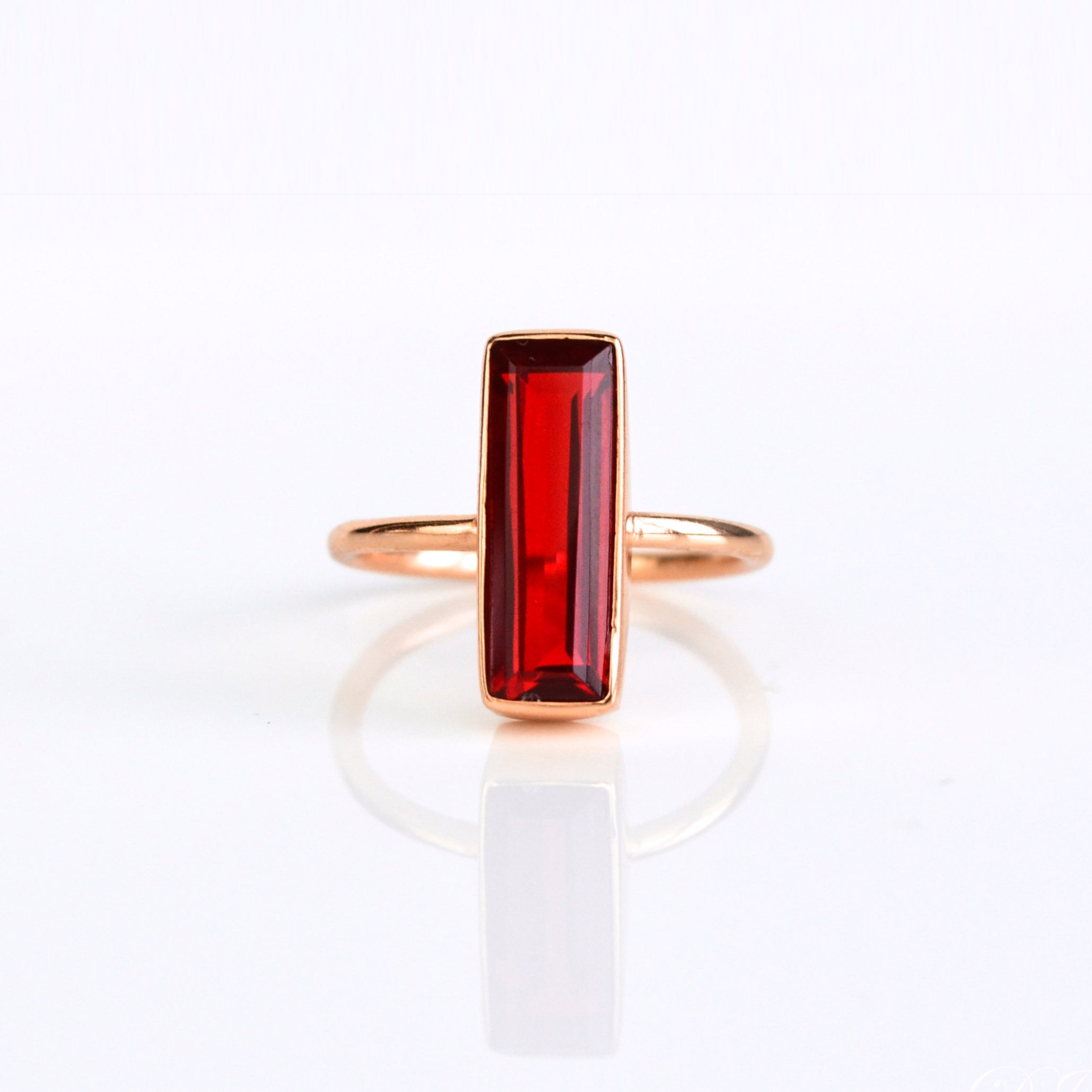
Strength, perseverance, devotion, and safe travel. Medieval warriors carried garnets as talismans of protection, and the stone's deep red glow was believed to light the way through darkness.
Garnet is actually a group of related minerals that come in virtually every color — though the deep red pyrope and almandine varieties are best known. The name derives from the Latin "granatum" (pomegranate) for its resemblance to pomegranate seeds. Garnets have been found in jewelry from ancient Egypt (3100 BCE), Sumeria, and Sweden. Noah was said to have used a garnet lantern to navigate the Ark through darkness. In the Victorian era, garnets were extremely popular in jewelry, particularly in Bohemian garnet clusters. Green tsavorite and orange spessartine garnets are among the rarest varieties.
Properties & Details
Topaz
Symbolic Meaning
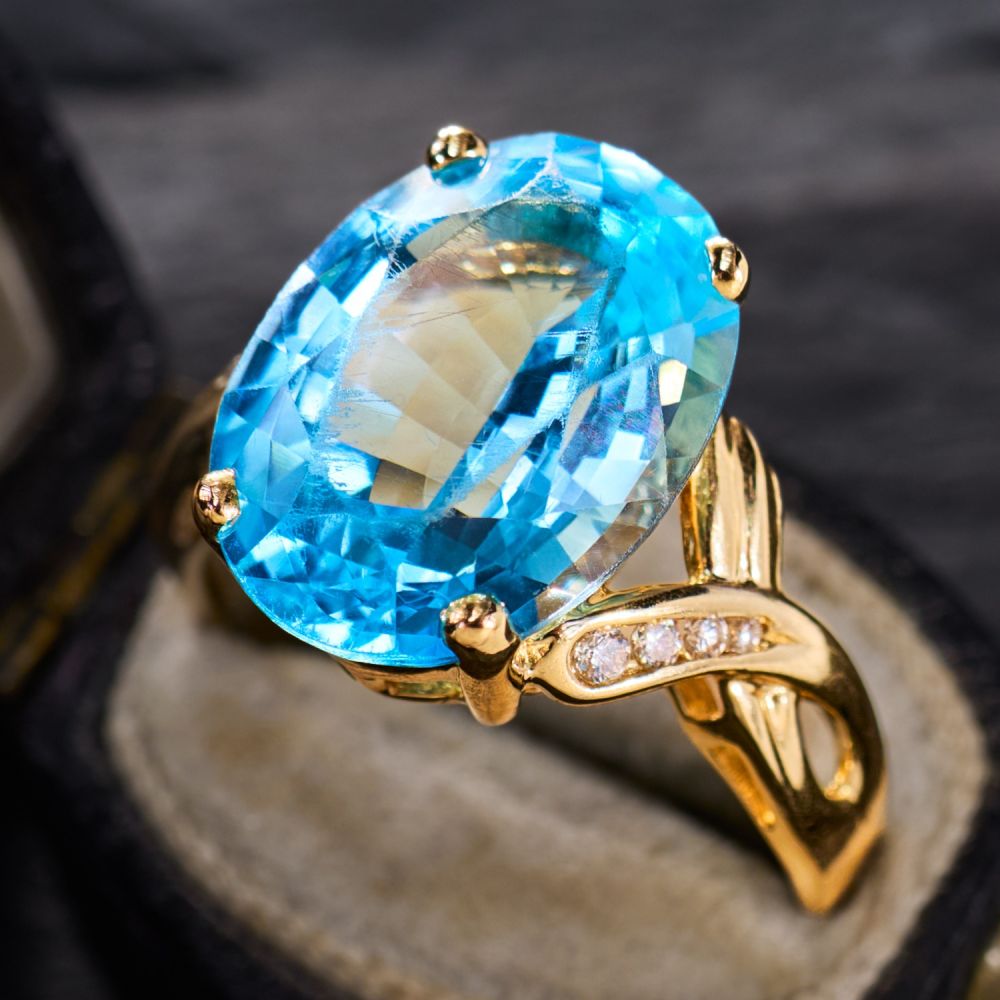
Clarity, confidence, joy, and good fortune. Topaz was believed by the Egyptians to be colored by the golden glow of the sun god Ra, bestowing strength and protection on the wearer.
Topaz is a silicate mineral known for its remarkable clarity and wide range of colors. While naturally occurring in golden, orange ("Imperial Topaz"), and pink shades, the extremely popular blue topaz found in most jewelry stores is typically white topaz that has been irradiated and heat-treated. Imperial topaz — a rich orange-gold variety from Ouro Preto, Brazil — is the most valuable and is named after the Brazilian emperors who claimed exclusive rights to the stones. In medieval times, topaz was thought to strengthen the mind, prevent mental disorders, and increase wisdom.
Properties & Details
Aquamarine
Symbolic Meaning
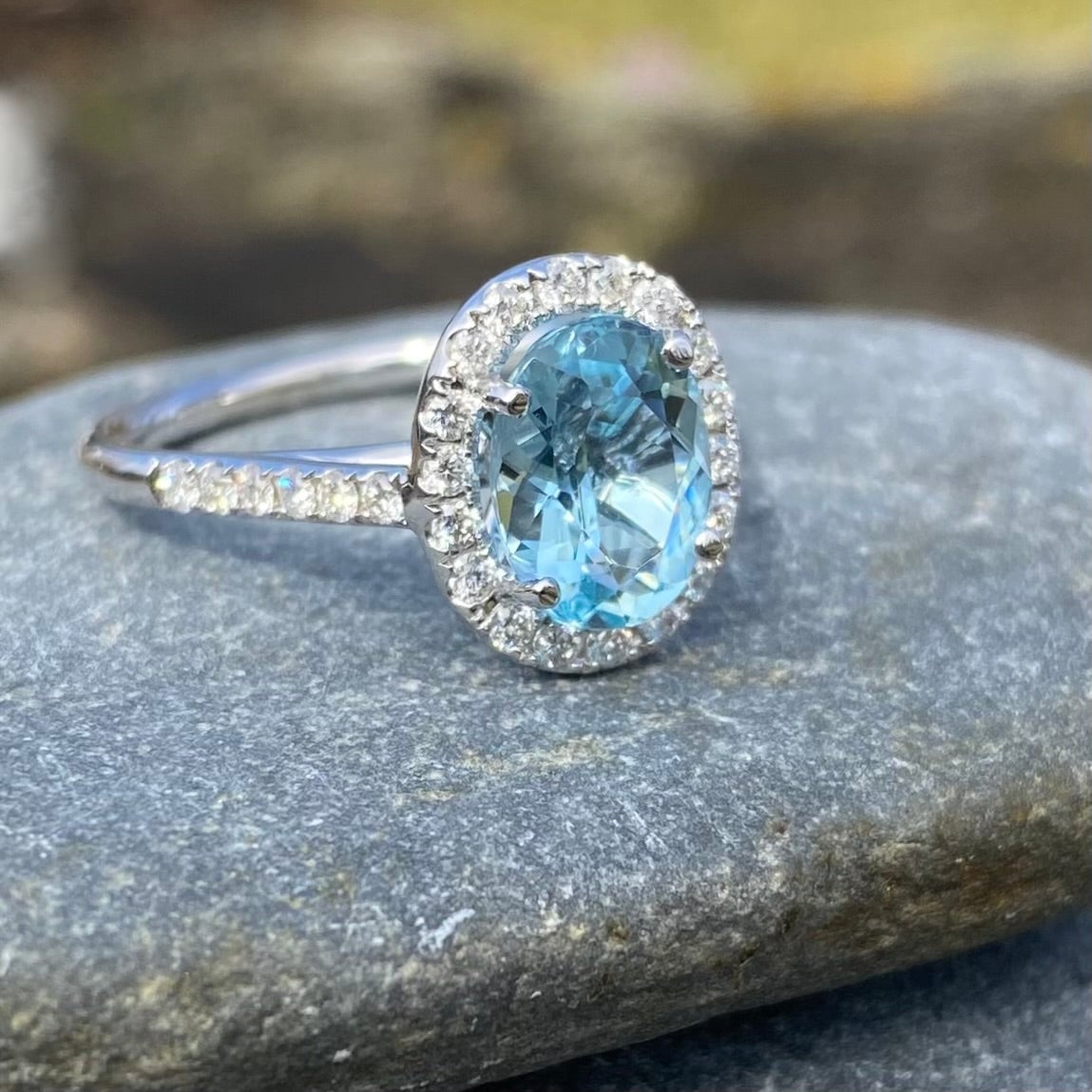
Courage, serenity, clarity, and safe voyage. Ancient sailors carried aquamarine as a talisman against ocean perils — the stone was believed to calm waves and ensure a safe return home.
Aquamarine is the blue-to-blue-green variety of the mineral beryl (making it a sister stone to emerald). Its name comes from the Latin "aqua marina" meaning "water of the sea," perfectly describing its tranquil ocean-blue color. The largest gem-quality aquamarine ever found — the Dom Pedro — weighs 10,363 carats and is housed at the Smithsonian. In medieval times, aquamarine was believed to reawaken love in married couples and was a popular gift between newlyweds. The stone is particularly associated with the throat chakra and is said to enhance communication and reduce conflict.
Properties & Details
Moonstone
Symbolic Meaning
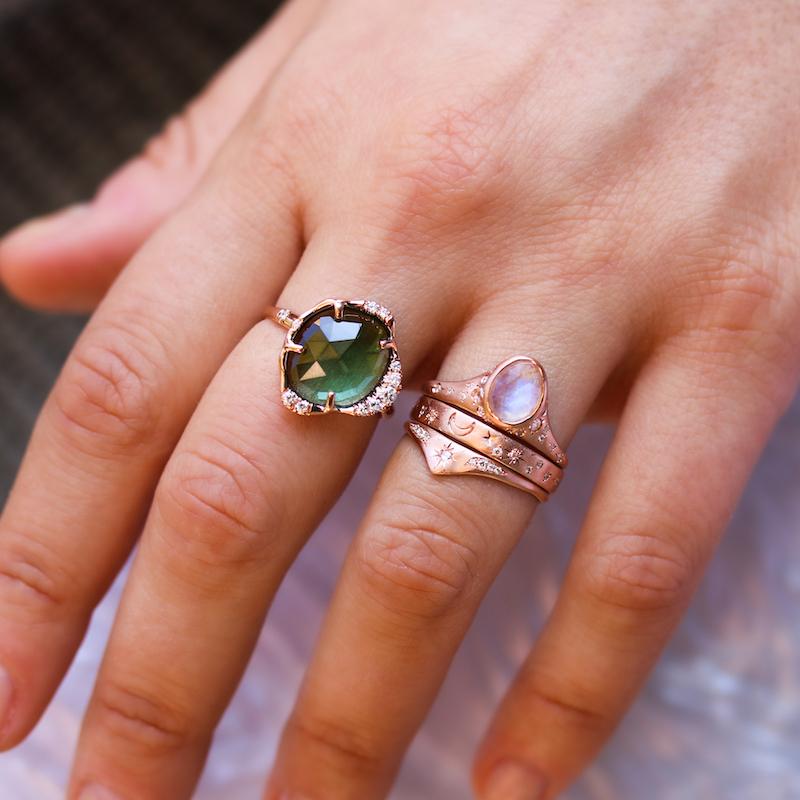
Intuition, femininity, new beginnings, and inner growth. Moonstone's ethereal glow (adularescence) evokes the moon itself — symbolizing cycles, change, and the divine feminine.
Moonstone is a feldspar mineral famous for its adularescence — a billowy, blue-white light that appears to float across the stone's surface, reminiscent of moonlight. In Hindu mythology, moonstone is made of solidified moonbeams. Ancient Romans believed the stone was formed from frozen moonlight and that the image of the moon goddess Diana could be seen within it. Moonstone is particularly sacred in India, where it is displayed on a yellow cloth (sacred color) and is considered a traditional wedding gift. The Art Nouveau movement (1890–1910) embraced moonstone heavily, with jewelers like René Lalique creating iconic moonstone pieces.
Properties & Details
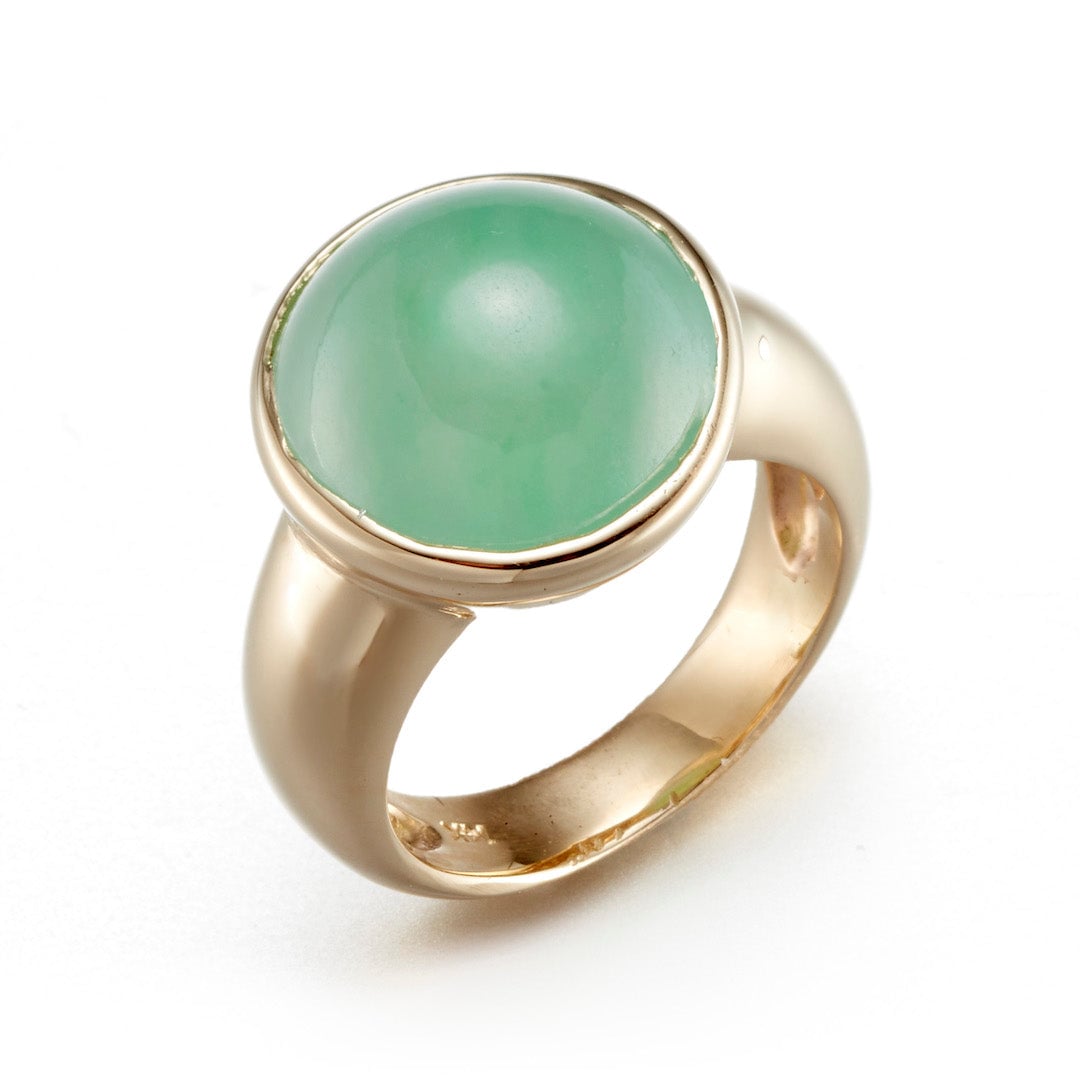
Jade
Symbolic Meaning
Harmony, balance, prosperity, and longevity. In Chinese culture, jade is more precious than gold — representing virtue, beauty, grace, and the bridge between heaven and earth.
Jade refers to two distinct minerals: nephrite (the original jade, softer) and jadeite (rarer, harder, more vivid). For over 5,000 years, jade has been central to Chinese civilization — Confucius compared jade's qualities to human virtues: its warmth represents benevolence, its transparency represents honesty, and its toughness represents wisdom. The Aztecs and Maya also revered jade above gold, associating it with royalty and the afterlife. In New Zealand, Māori people carve nephrite jade (pounamu) into pendants called "hei-tiki" as treasured family heirlooms. Imperial jade — a vivid emerald-green jadeite — is the most valuable variety.
Properties & Details
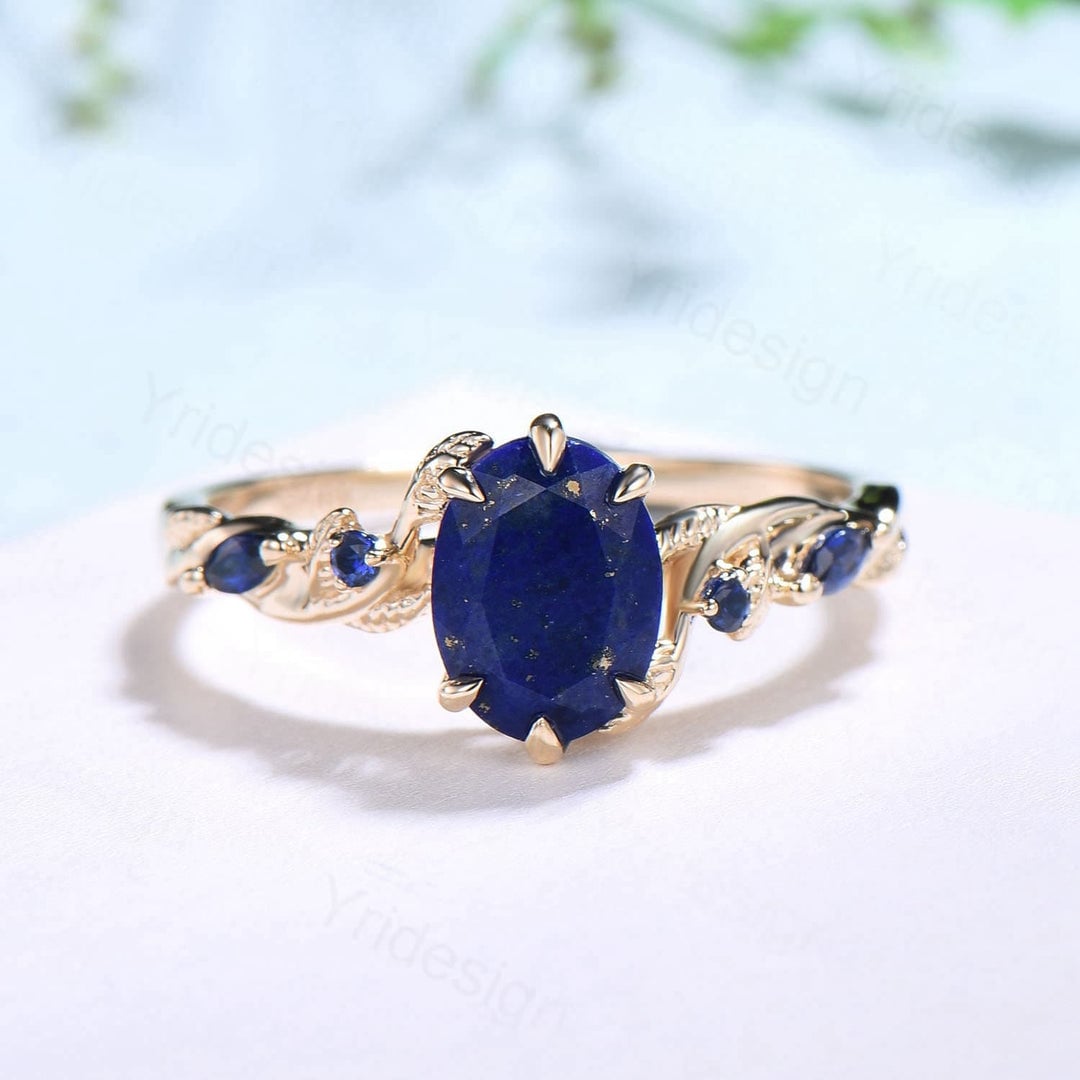
Lapis Lazuli
Symbolic Meaning
Truth, wisdom, royalty, and cosmic awareness. Lapis lazuli was ground into ultramarine pigment by Renaissance painters — literally worth more than gold — symbolizing the divine and celestial.
Lapis lazuli is a deep blue metamorphic rock composed primarily of lazurite, with golden flecks of pyrite ("fool's gold") and white calcite veining. It has been mined in the Sar-i Sang mines of Afghanistan for over 6,500 years — the same source that supplied ancient Sumerians, Egyptians, and Mesopotamians. Cleopatra used ground lapis as eyeshadow. In Renaissance Italy, the pigment ultramarine (made from lapis) was the most expensive color available — reserved exclusively for painting the robes of the Virgin Mary. The golden pyrite inclusions were thought to resemble stars in the night sky.
Properties & Details
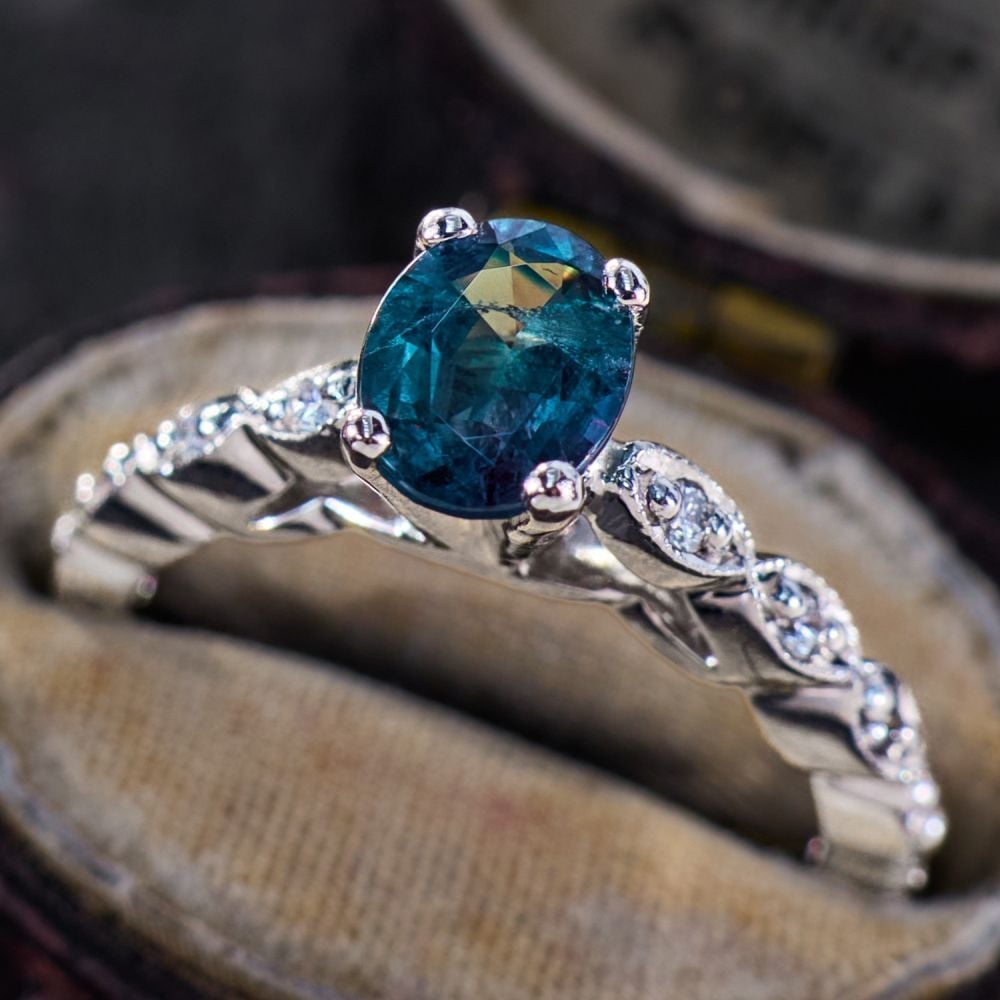
Alexandrite
Symbolic Meaning
Transformation, adaptability, duality, and good fortune. Alexandrite's ability to change color represents the balance between the physical and spiritual worlds.
Alexandrite is one of the rarest and most remarkable gemstones in the world, famous for its dramatic color change — appearing emerald green in daylight and ruby red under incandescent light. This phenomenon, called the "alexandrite effect," is caused by the stone's complex absorption of light. Discovered in Russia's Ural Mountains in 1830, it was named after Tsar Alexander II because the green and red colors matched Imperial Russia's military colors. Natural alexandrite of fine quality is extraordinarily rare and can cost more per carat than diamonds, rubies, or emeralds.
Properties & Details
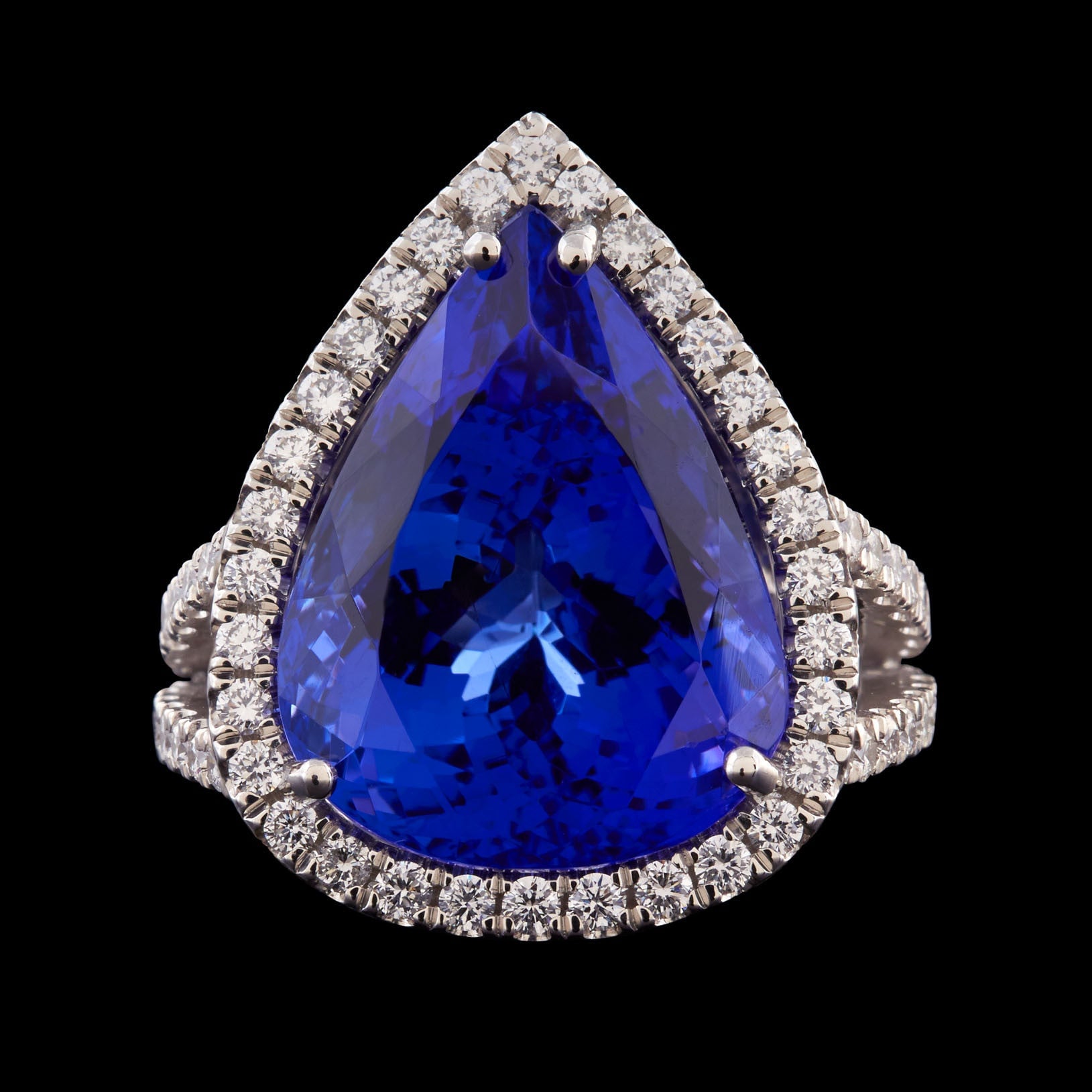
Tanzanite
Symbolic Meaning
Uniqueness, transformation, spiritual awakening, and rarity. Found in only one place on Earth, tanzanite symbolizes the extraordinary and unrepeatable nature of individual experience.
Tanzanite is found in only one location on the entire planet — a small area near Mount Kilimanjaro in Tanzania. Discovered in 1967, it was named and popularized by Tiffany & Co., who recognized its extraordinary beauty. Tanzanite displays trichroism — showing blue, violet, and burgundy colors depending on the viewing angle and lighting. Geologists estimate that tanzanite is 1,000 times rarer than diamond and that the single known deposit may be exhausted within the next 20–30 years, making it truly a "one generation gem." Its vivid blue-violet color is unlike any other gemstone.
Properties & Details
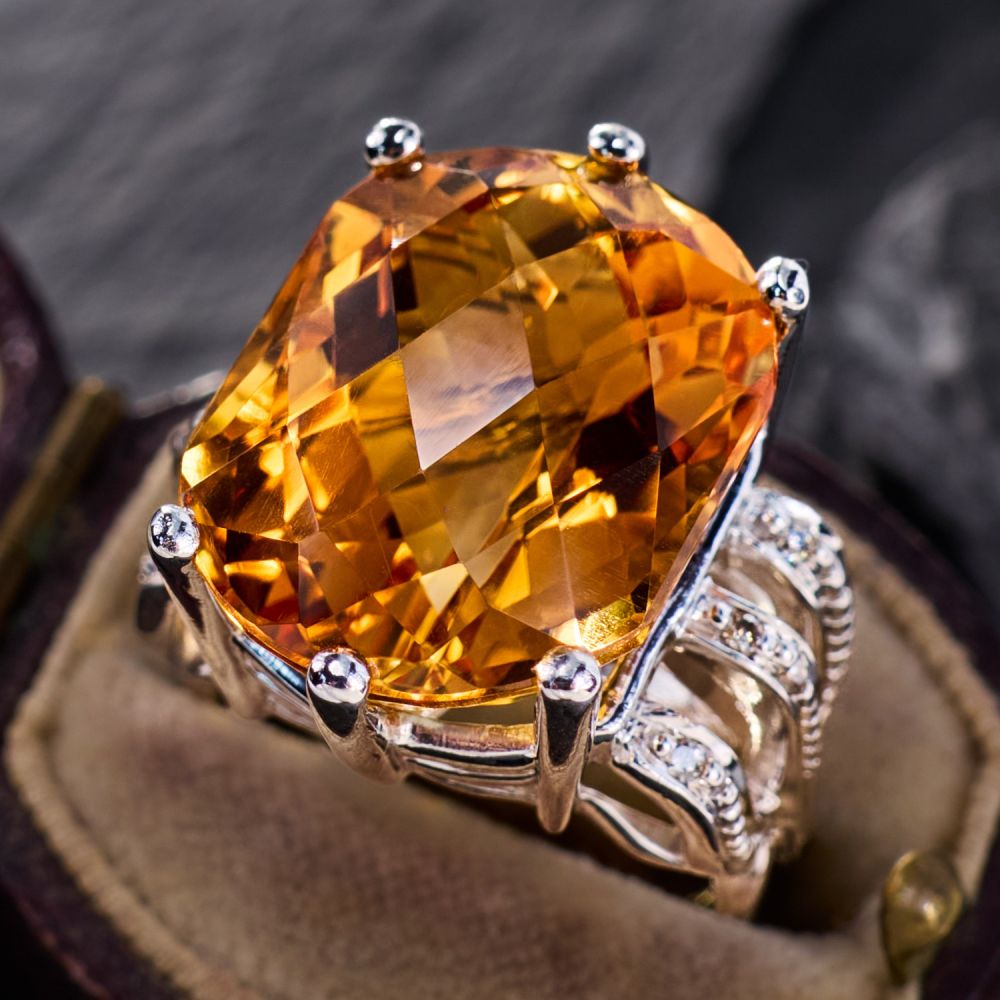
Citrine
Symbolic Meaning
Abundance, prosperity, joy, and positive energy. Known as the "Merchant's Stone" because shopkeepers historically placed citrine in their cash registers to attract wealth and success.
Citrine is a golden-yellow variety of quartz whose name comes from the French "citron" (lemon). It is one of the most affordable and popular yellow gemstones, ranging from pale yellow to deep amber. Natural citrine is actually quite rare — most commercial citrine is heat-treated amethyst or smoky quartz that transforms to golden hues. In ancient times, citrine was carried as protection against snake venom and evil thoughts. Scottish Highlanders used citrine as decoration for kilt pins and sword handles. It is one of few gemstones that never needs cleansing because it is believed to not accumulate negative energy.
Properties & Details
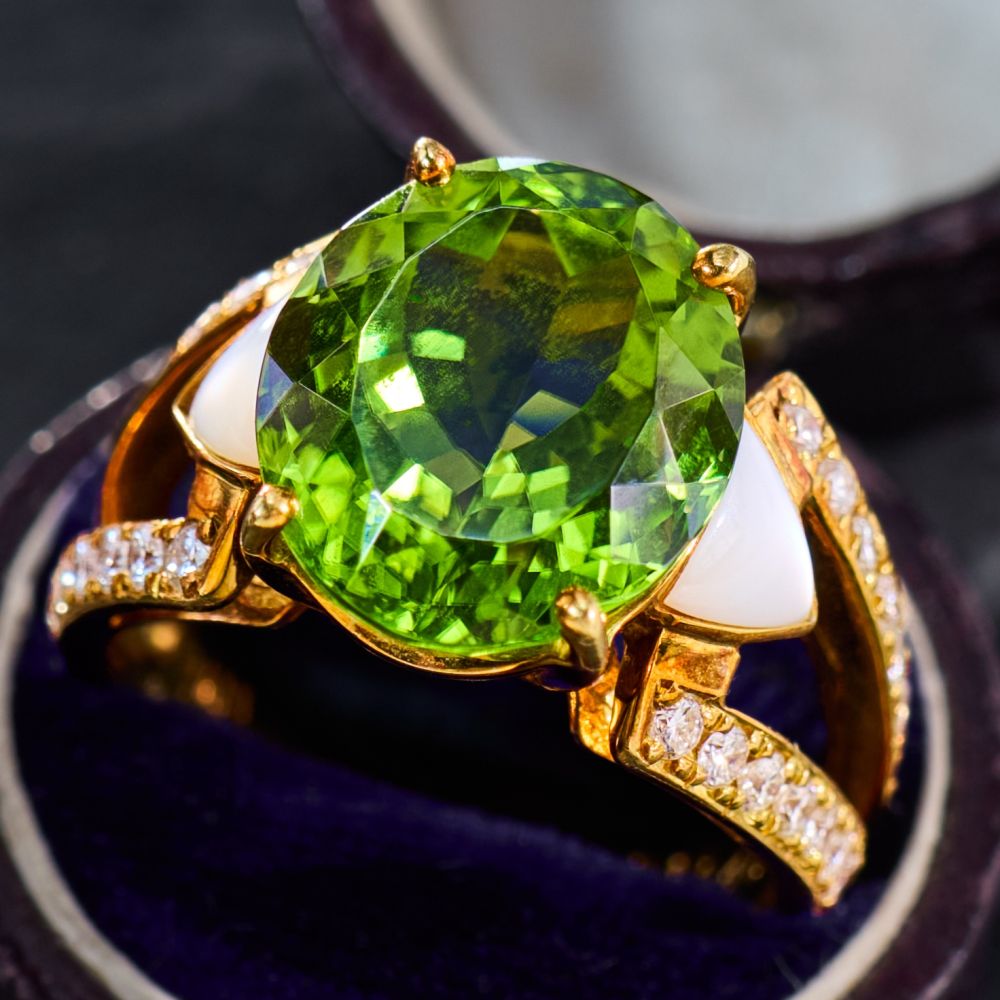
Peridot
Symbolic Meaning
Renewal, vitality, growth, and protection from nightmares. Ancient Egyptians called peridot the "gem of the sun" and believed it protected the wearer from terrors of the night.
Peridot is one of the few gemstones that occur in only one color — a distinctive yellow-green to olive green. It is the gem-quality variety of the mineral olivine, and notably, it is one of only two gemstones formed not in the Earth's crust but in the mantle, brought to the surface by volcanic activity. Peridot has even been found in meteorites and on Mars. The ancient Egyptians mined peridot on the volcanic island of Zabargad (St. John's Island) in the Red Sea for over 3,500 years. Some historians believe Cleopatra's famous "emeralds" were actually peridots.
Properties & Details
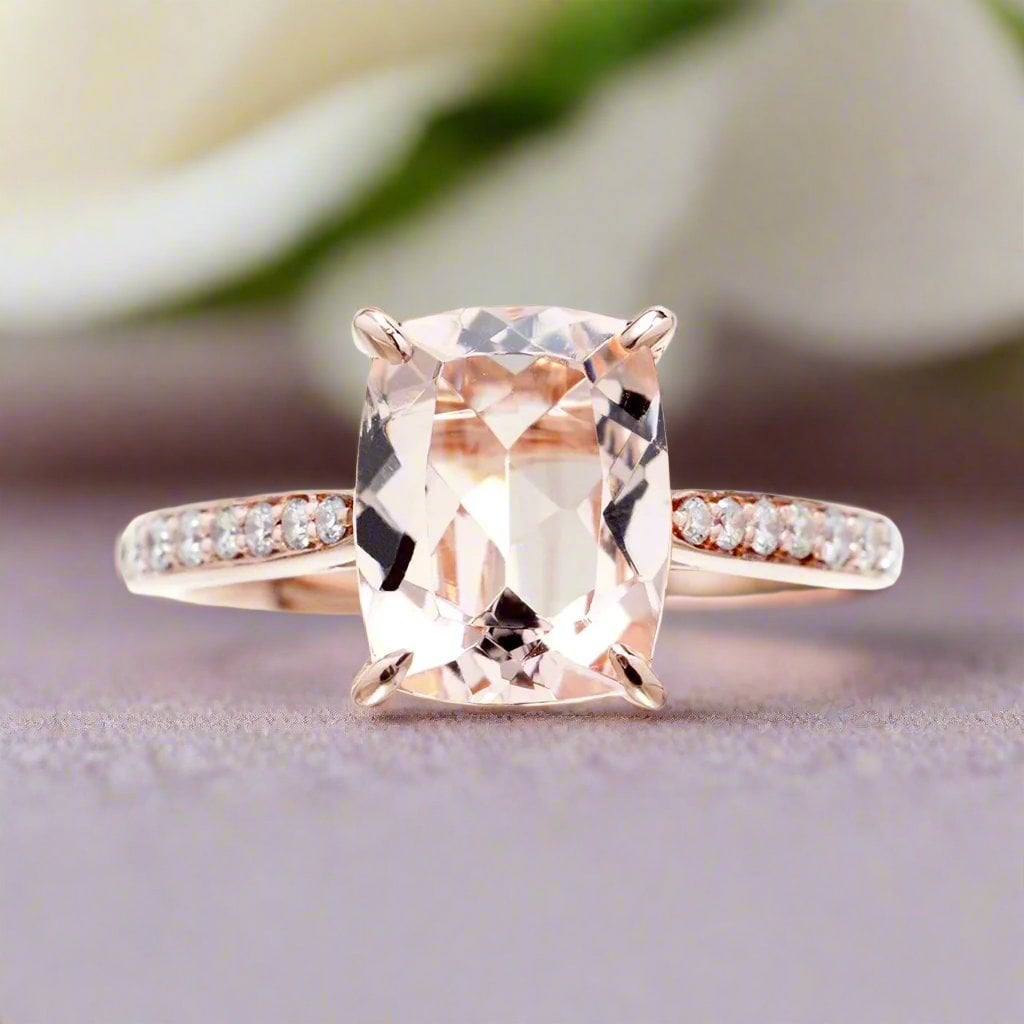
Morganite
Symbolic Meaning
Divine love, compassion, emotional healing, and tenderness. Morganite's soft pink color resonates with the heart chakra, encouraging unconditional love and gentle strength.
Morganite is the pink to peach variety of beryl (making it a sibling to emerald and aquamarine). It was discovered in Madagascar in 1910 and named after J.P. Morgan, the American financier and avid gem collector, by the renowned gemologist George Frederick Kunz of Tiffany & Co. Morganite has surged in popularity as an engagement ring stone in recent years — its soft peachy-pink hue offers a romantic, feminine alternative to traditional diamond solitaires at a more accessible price point. Large, clean morganite crystals are relatively common, allowing for impressive carat weights.
Properties & Details
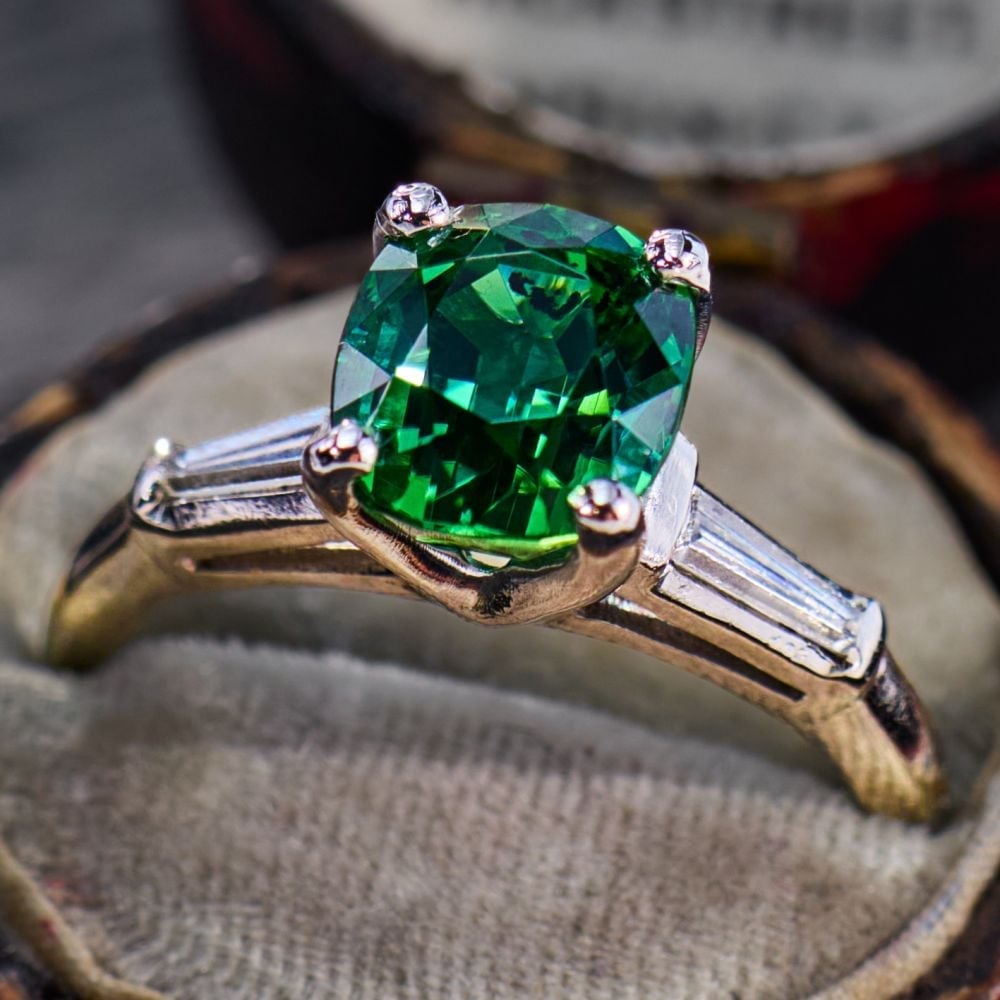
Tourmaline
Symbolic Meaning
Creativity, inspiration, protection, and emotional balance. Tourmaline comes in more colors than any other gemstone, symbolizing the full spectrum of human experience and emotion.
Tourmaline is a boron silicate mineral that occurs in the widest range of colors of any gemstone family — from vivid pinks (rubellite) and greens (chrome tourmaline) to electric blues (Paraíba tourmaline) and multicolored "watermelon" stones that display pink, white, and green in a single crystal. Paraíba tourmaline, discovered in Brazil in 1989, displays a neon-blue color caused by copper and is one of the most valuable gemstones per carat. Ancient magicians used black tourmaline (schorl) for protection against dark forces. The name comes from the Sinhalese "turmali" meaning mixed-colored stone.
Properties & Details
Which Finger Should
You Wear Your Ring On?
Every finger carries its own meaning, rooted in centuries of tradition and cultural symbolism. The choice of finger can transform a simple ring into a powerful personal statement — and meanings shift between the left and right hand.
Thumb
Willpower & Self-Assertion
A ring on the thumb symbolizes willpower, independence, and self-assertion. It makes a bold style statement and has been associated with wealth and influence throughout history. In ancient Rome and Greece, thumb rings were worn by archers as a practical guard and later became symbols of rank and power among the wealthy elite. In modern psychology, the thumb is considered the finger of individuality — choosing to wear a ring here signals confidence and a desire to stand apart from convention.
Cultural Traditions
In ancient Greece and Rome, thumb rings indicated status and rank — only those of significant wealth wore them. In Turkish and Mongolian archery traditions, thumb rings were essential equipment that evolved into status symbols. In modern Western fashion, thumb rings convey a sense of nonconformity and personal expression. In palmistry, the thumb is ruled by Mars and represents assertiveness and drive.
✋ Left Hand
Inner willpower, personal goals, and self-motivation
🤚 Right Hand
Outward confidence, social influence, and leadership projection
Index Finger
Authority & Leadership
The index finger represents authority, leadership, ambition, and direction. Historically, kings, popes, and rulers wore signet rings on this finger to seal decrees and display supreme power. The index finger is our pointing finger — it directs, commands, and shows the way. Wearing a ring here speaks to one's desire to lead, take charge, and make an impact. In many organizations and religious traditions, this finger carries the seal of office.
Cultural Traditions
In many European traditions, family crests and signet rings were worn on the index finger as symbols of dynastic authority. Popes wear the Ring of the Fisherman on this finger, symbolizing their role as the successor of St. Peter. In Jewish tradition, the wedding ring is placed on the index finger during the ceremony (though often moved to the ring finger afterward). In palmistry, the index finger is associated with Jupiter — the planet of expansion, authority, and ambition.
✋ Left Hand
Private ambition, inner direction, and personal authority
🤚 Right Hand
Public leadership, professional authority, and social power
Middle Finger
Balance & Responsibility
As the longest finger at the center of the hand, the middle finger symbolizes balance, responsibility, structure, and personal identity. It anchors the hand and provides stability — just as wearing a ring here can represent being a grounded, centered individual. The middle finger is often chosen for rings of personal significance rather than cultural obligation, making it a canvas for self-expression. It is the least common finger for traditional ring-wearing, which gives it a distinctive, unconventional appeal.
Cultural Traditions
Less tied to specific cultural traditions than the ring or index finger, the middle finger is often chosen for its visual prominence and central position. In palmistry, it is associated with Saturn — the planet of discipline, order, and responsibility. In some Eastern philosophies, wearing a ring on the middle finger promotes balance between material and spiritual pursuits. Fashion designers often recommend it for larger, statement cocktail rings due to its central position.
✋ Left Hand
Personal identity, self-analysis, and inner discipline
🤚 Right Hand
Responsibility, structure, and practical decision-making
Ring Finger
Love, Commitment & Creativity
The ring finger is the most universally recognized placement for love and commitment. Ancient Romans believed the "vena amoris" (vein of love) ran directly from this finger to the heart — though anatomically disproven, the romantic symbolism endures worldwide. Beyond love, the ring finger is also associated with creativity and artistic expression. In many cultures, this is the only finger with a universally agreed-upon meaning, making it the most symbolically potent choice for engagement and wedding rings.
Cultural Traditions
In Western cultures, the left ring finger is used for wedding and engagement rings, following the Roman vena amoris tradition. In Germany, Russia, Poland, Norway, Greece, Austria, and India, the right ring finger is traditional for wedding bands. In Chinese culture, each finger represents a different family member — the ring finger represents one's life partner. In some Celtic traditions, the Claddagh ring is worn on this finger to indicate relationship status: heart facing inward means taken, outward means available.
✋ Left Hand
Romantic commitment, engagement, and marriage (Western tradition)
🤚 Right Hand
Wedding band (Eastern European tradition), creativity, and artistic expression
Pinky Finger
Communication & Professional Status
The pinky finger is linked to communication, intelligence, persuasion, negotiation, and professional status. It has a long history of use for signet rings and organizational symbols across many cultures. In engineering, the pinky is where graduates wear the Iron Ring (or its copper equivalent) as a symbol of their professional obligation to society. In some British and American traditions, pinky rings indicated family status or membership in elite organizations.
Cultural Traditions
In British aristocracy, men traditionally wore signet rings on the pinky to press their family seal into wax. In North America, the Engineer's Iron Ring ceremony (Canada) and the Order of the Engineer (USA) place rings on the pinky of the working hand. Mafia and crime fiction have popularized the pinky ring as a symbol of connections and loyalty. In palmistry, the pinky is ruled by Mercury — the planet of communication, commerce, and intellect. In some cultures, two stacked pinky rings indicated a person was married but also open to flirtation.
✋ Left Hand
Personal expression, creative communication, and family heritage
🤚 Right Hand
Professional achievement, organizational membership, and social signaling
Cultural Meanings
Ring symbolism is far from universal — meanings shift dramatically across cultures, religions, historical periods, and social traditions. Understanding these differences enriches our appreciation of this timeless form of personal expression.
Western Europe & Americas
The left ring finger is the standard for wedding and engagement rings, based on the ancient Roman belief in the "vena amoris" — a vein leading directly to the heart. Engagement rings became widespread after the De Beers "A Diamond is Forever" campaign in 1947. In the Americas, class rings worn on the right ring finger celebrate academic achievement, while championship rings in professional sports are worn as symbols of team glory.
Key Traditions
- •Wedding ring on left ring finger (Roman vena amoris tradition)
- •Signet rings on the pinky finger (British aristocratic families)
- •Class rings on right ring finger (American academic tradition)
- •Promise rings exchanged between young couples before engagement
Eastern & Northern Europe
Countries like Germany, Russia, Poland, Norway, Greece, and Austria traditionally use the right ring finger for wedding rings, reflecting Orthodox Christian and cultural traditions. In Russia, three interlocking bands (the "Russian wedding ring") represent faith, hope, and love. The Claddagh ring from Ireland uses its orientation to signal relationship status: heart inward means taken, heart outward means available.
Key Traditions
- •Right ring finger for wedding bands (Orthodox tradition)
- •Russian wedding ring — three interlocking bands
- •Irish Claddagh ring — orientation signals relationship status
- •Scandinavian couples often exchange plain gold bands
South & East Asia
Ring placement varies widely across Asia. In India, the right hand is often favored for ceremonial rings, and toe rings ("bichiya") are traditional symbols of married status for Hindu women. In China, a folk tradition assigns each finger to a family member: thumb for parents, index for siblings, middle for self, ring for partner, and pinky for children. In Japan, engagement rings became popular only after World War II through Western cultural influence.
Key Traditions
- •India: toe rings for married women, right hand for ceremonies
- •China: each finger represents a different family member
- •Japan: Western-style engagement rings adopted post-WWII
- •Southeast Asia: jade and gold rings for prosperity and protection
Middle East & Africa
In Islamic tradition, men traditionally wear rings on the right hand, and the Prophet Muhammad is reported to have worn a silver ring. Gold rings are worn by women. In many African cultures, rings made from locally sourced materials carry deep spiritual significance — brass rings in West Africa, beaded rings among the Maasai, and puzzle rings in Ethiopia represent the complexity of marital relationships.
Key Traditions
- •Islamic tradition: silver rings for men, often on right hand
- •West African brass rings symbolize wealth and fertility
- •Maasai beaded rings indicate age group and social status
- •Ethiopian puzzle rings — multi-band rings symbolizing marriage
Professional & Social Orders
Engineers, graduates, and members of certain fraternal organizations wear specific rings to signify professional achievement, ethical responsibility, and membership. The Canadian Iron Ring ceremony (Ritual of the Calling of an Engineer), established in 1922, is one of the most well-known professional ring traditions. Similar traditions exist in medicine, law, and military service across many countries.
Key Traditions
- •Canadian Iron Ring — engineers wear on working hand pinky (est. 1922)
- •US Order of the Engineer — stainless steel ring, similar purpose
- •Papal Ring of the Fisherman — destroyed upon each Pope's death
- •Medical class rings and military academy rings worldwide
Ancient Civilizations
Ring-wearing traditions stretch back over 6,000 years. Ancient Egyptians used rings as symbols of eternity — the circular shape having no beginning or end. The ancient Greeks introduced the tradition of giving betrothal rings, while Romans formalized the engagement ring ("anulus pronubus") as a legal pledge of marriage. Celtic peoples crafted intricate knotwork rings symbolizing the interconnection of all things.
Key Traditions
- •Egypt: scarab rings and eternal circle symbolism (3000+ BCE)
- •Rome: iron engagement rings (later gold) as legal contracts
- •Greece: betrothal rings with Eros or love imagery
- •Celtic: knotwork rings symbolizing infinity and interconnection
Remember — while traditions offer guidance and historical context, the most meaningful choice is the one that feels right to you. Many people today choose ring placement for comfort, aesthetics, or personal significance rather than strict cultural rules. Your ring tells your story.